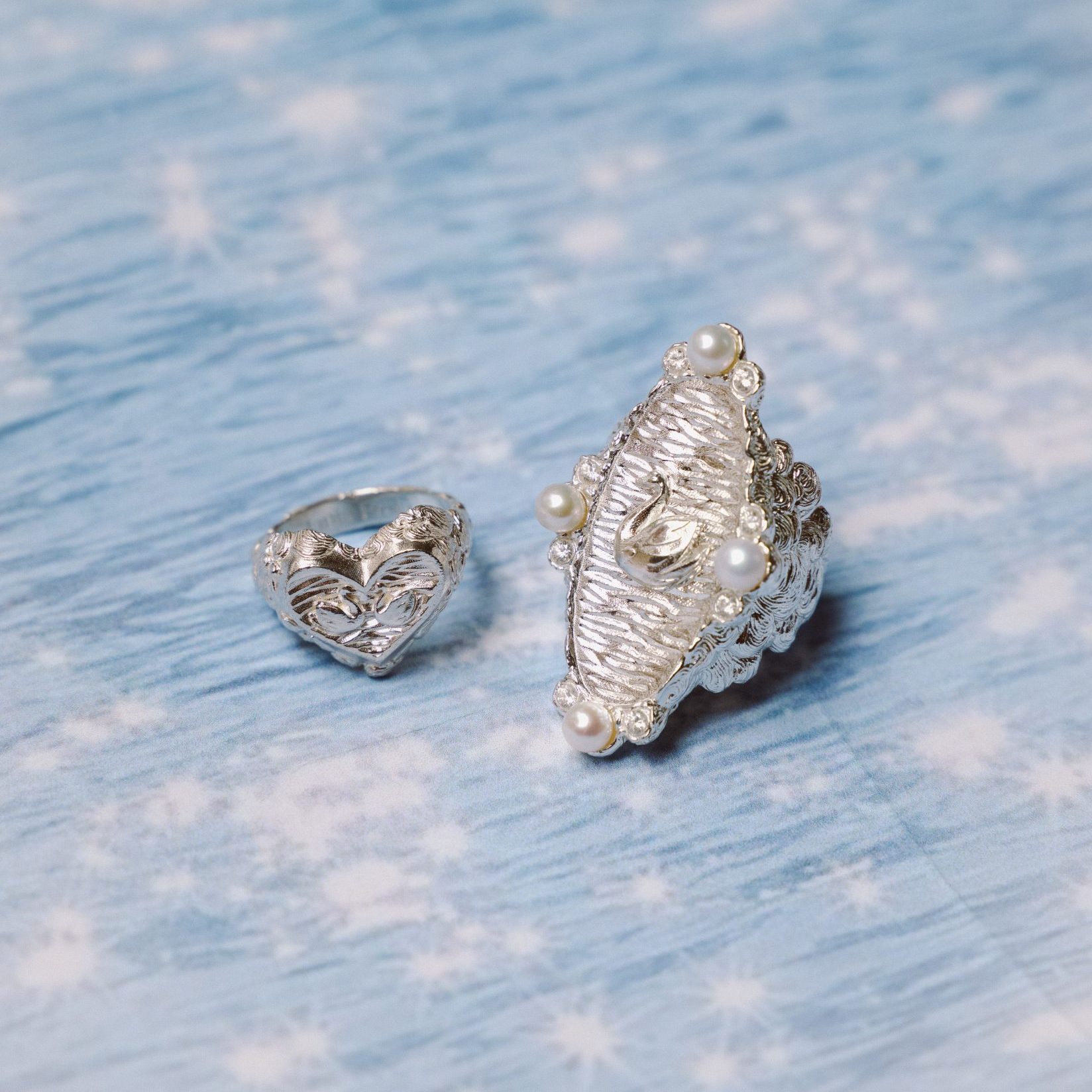
The new Albedo collection brings together swans, the horizon, sky and water, childhood memories, and the constellation Cygnus. Janja Prokić talks about the search for form, surrendering to the creative process, and why sometimes you have to get lost in order to find something.
When was the last time you looked at the horizon?
Just a moment ago, when I was walking home to the cottage and looked into the distance, all the way towards Ještěd. There is often such thick fog in the Lusatian Mountains that it lies between the hills, with the sky above it, and you don’t know where you are, whether you are sitting on the ground or in a cloud. And I have loved looking at the horizon over the sea since I was a child. I am fascinated by the place where the sky and water meet. A place where you can get lost or dissolve into it.
Is it a pleasant kind of getting lost?
For me, yes. I generally like getting lost. When I walk in the woods, I like to go off the paths. I enjoy travelling alone to new places and walking without a map or a plan. And yet, I discover things I would never find on planned journeys. Not knowing where you are going gives you the freedom to discover things that would otherwise remain hidden. Both in the physical world, in a city or a forest, and in your thoughts and desires.
What symbols appear in the new Albedo collection?
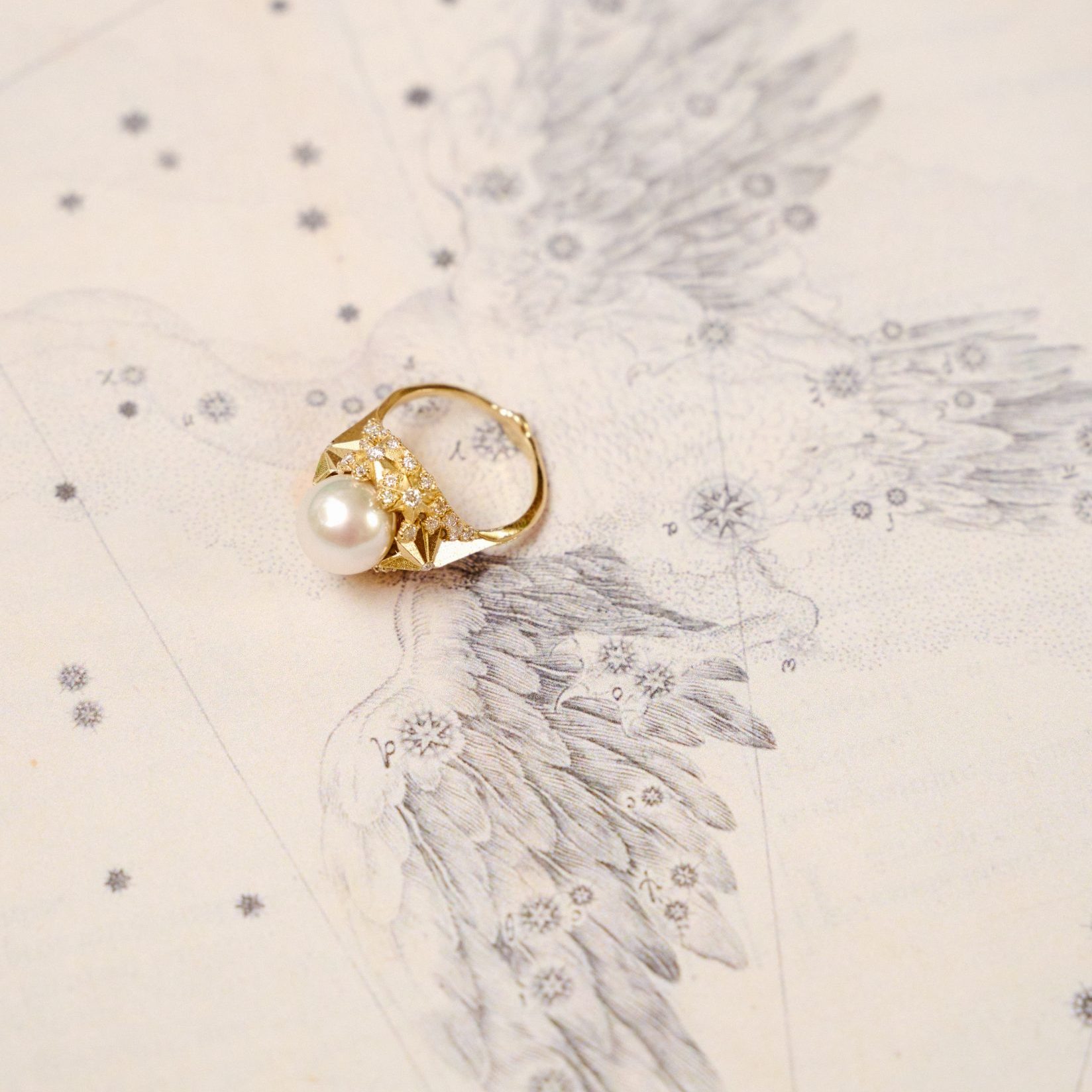
First and foremost, I wanted to work with the swan. I have loved swans since childhood. And when I started working on the collection and told my parents about my first ideas, they reminded me that when I was a child, they used to call me “labudiću” – little swan. I had completely forgotten that… Swans are incredible. I often watch them when I am near the water. I am moved by the way they carry their young on their backs. I identify with the fact that they have a place they return to, their home. And I love that they stay with one partner and form long-lasting relationships. I also like the fact that if you make a swan angry, you will feel its anger. Alongside the swan, which moves elegantly through both water and sky, I am also fascinated by the constellation Cygnus. It has a simple cross-like shape and is one of the most prominent constellations in the summer sky. Because of its position in the Milky Way, it is particularly powerful at night. There is a lot happening within it, and it has its own nebulae, places where new stars are born. This connection between two dimensions, the earthly and the otherworldly, was also important to me.
Can you describe your creative process?
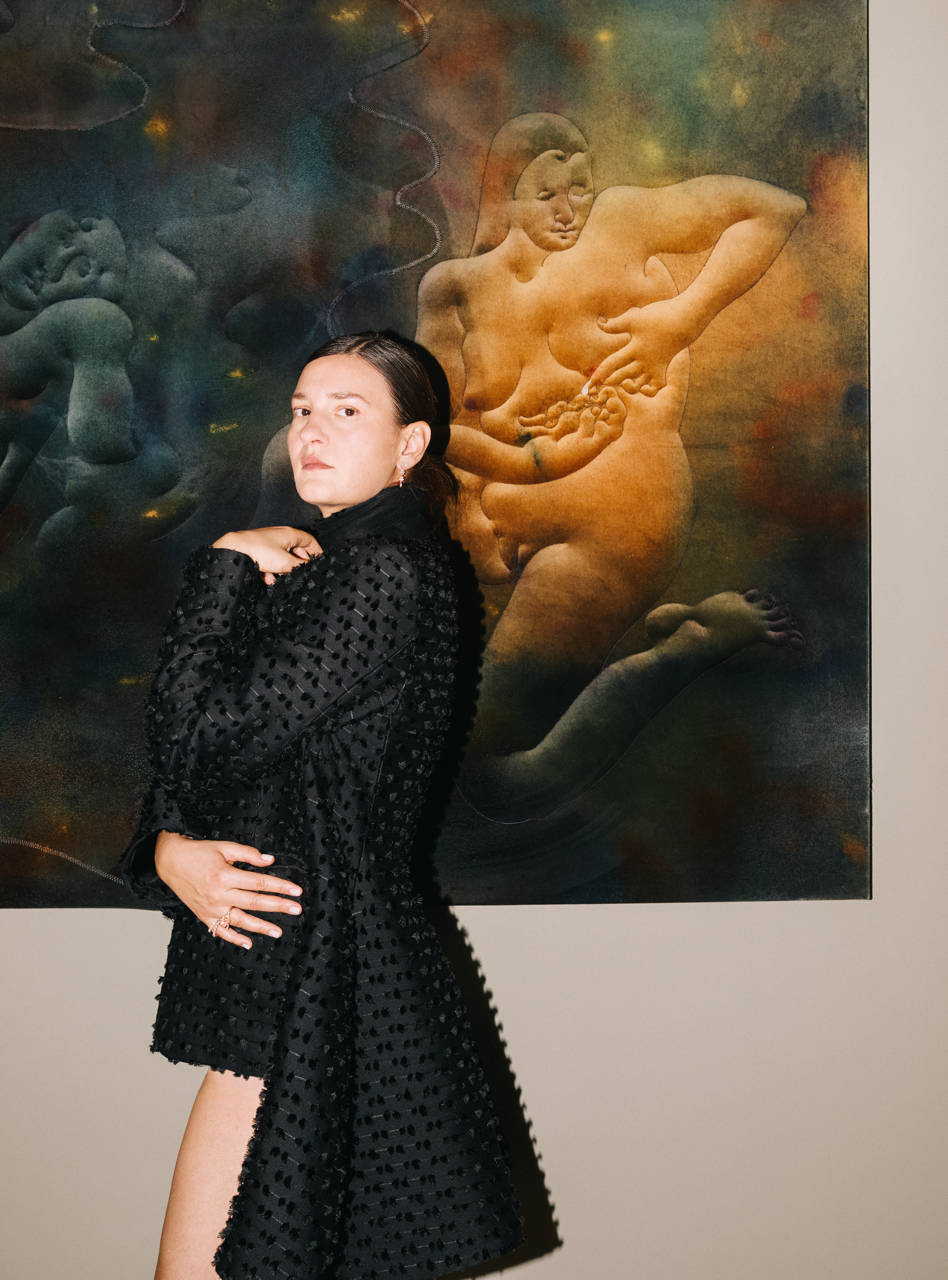
I can’t really say. I draw, I model, and somehow it comes into being. It is not something that is completely conceived in my head. The creative process, whether it is jewellery or my free artistic work, is about a kind of surrender, letting go, perhaps even getting lost and finding something new. It is like a journey into another world and then a return.
Did you learn something new while creating this collection?
This time, the jewellery has an almost antique vocabulary of forms, and technically the craftsmanship has moved another step forward. The goldsmithing is so refined that every piece fits perfectly despite its distinctive form, and each piece is carefully finished on the inside as well. If it were possible, the rings could even be worn inside out – both sides are equally interesting. And then there is a whole chapter in itself: the stones used…
What makes them exceptional?
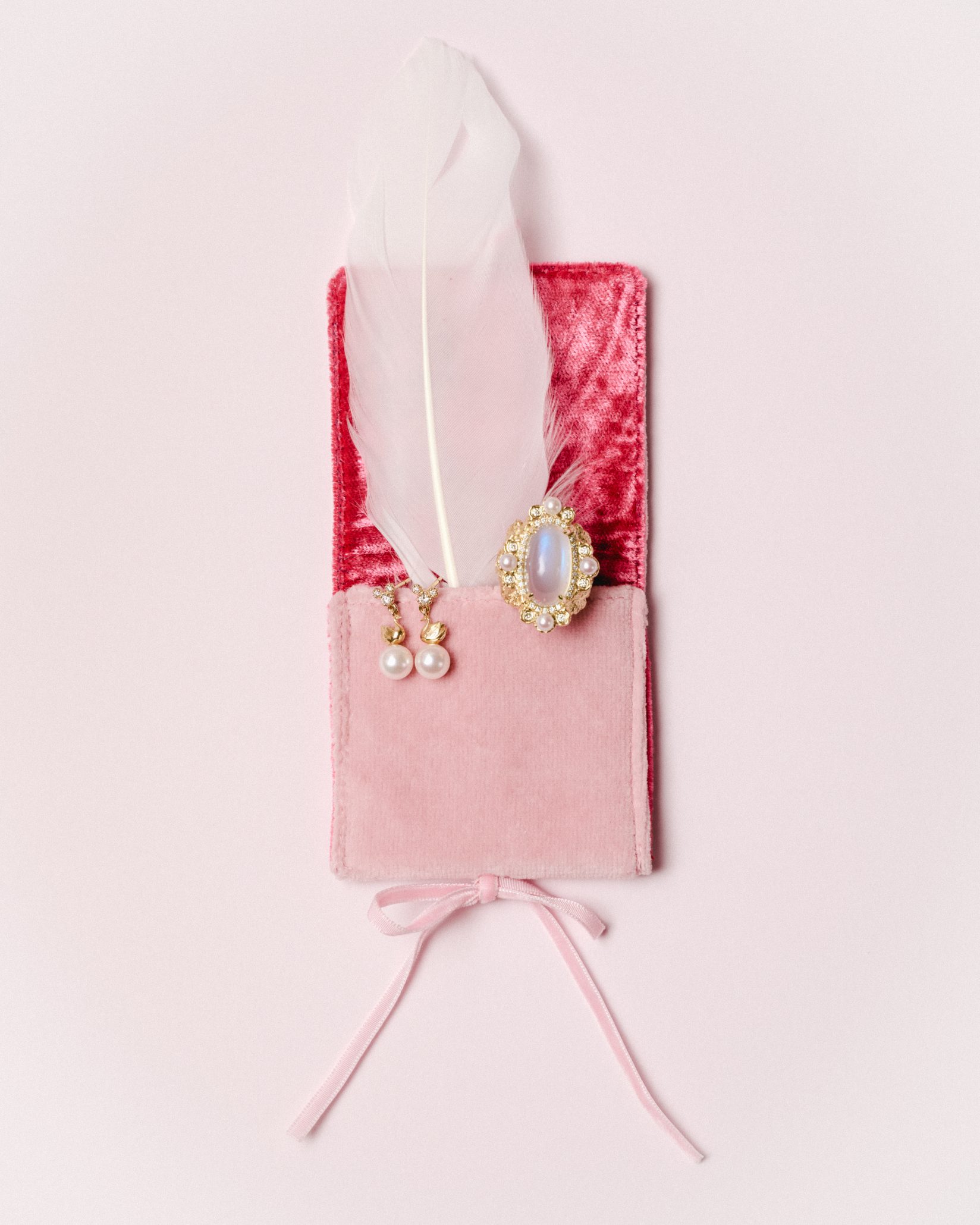
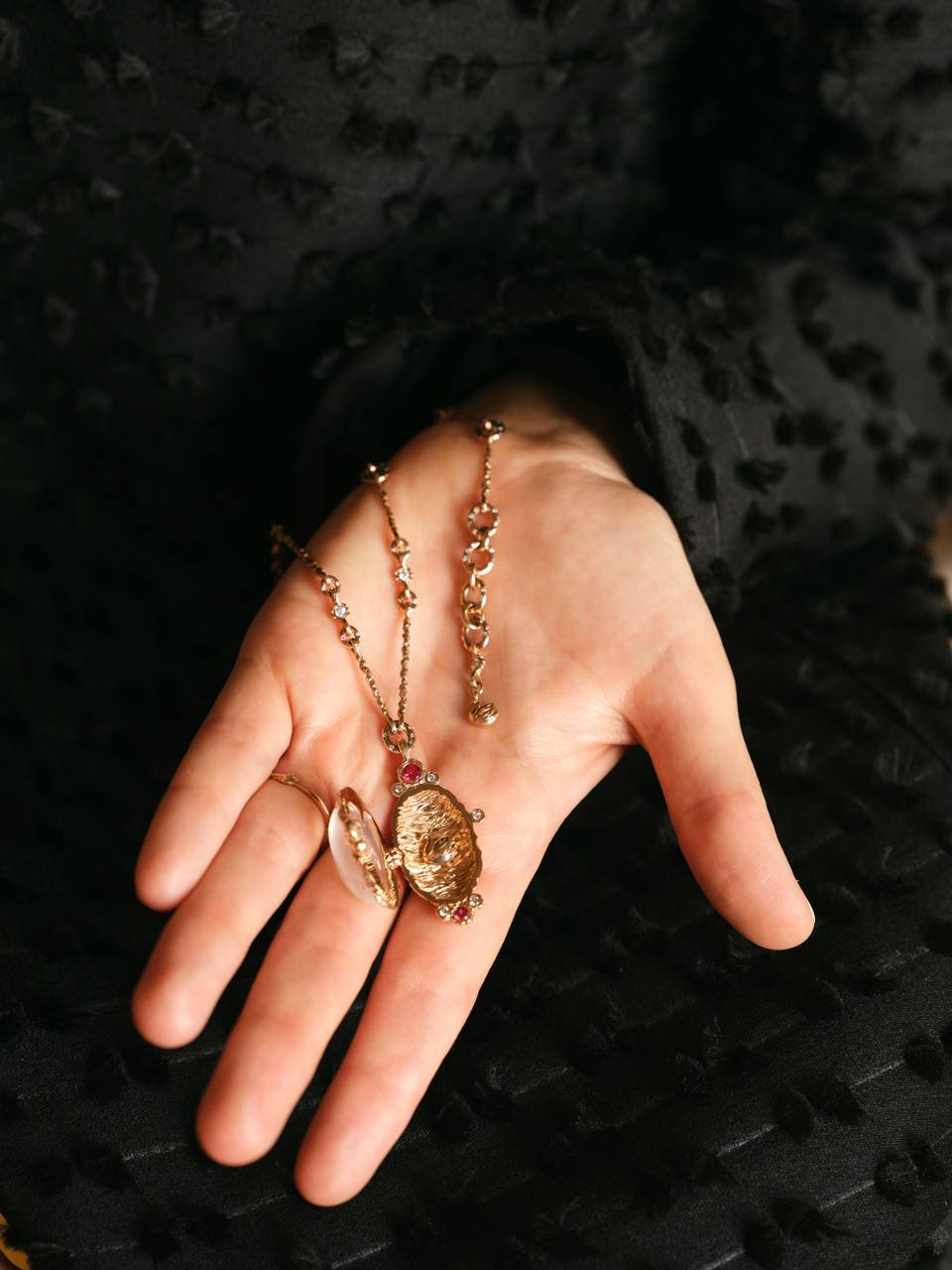
I chose the most interesting ones. For example, the moonstones, which are an important part of the jewellery in the collection, come from Sri Lanka, formerly known as Ceylon. Sri Lanka is one of the most significant sources of high-quality moonstones. Particularly prized are translucent stones with a strong, moving blue sheen. This characteristic optical effect is called adularescence. It is created by the scattering of light between very thin internal layers of feldspar, producing a moving glow reminiscent of moonlight. In ancient Rome, people believed that moonstone was formed from solidified rays of the moon. In India, too, it was long regarded as a sacred stone created from moonlight. Moonstone is connected to the theme of the horizon. Its appearance is similarly ambiguous. You are not quite sure whether you are looking at water, air, or a small universe hidden inside the stone. It changes according to the light and the angle from which you look at it, just like the surface of the water or the sky. For me, the horizon is also connected to a line by Duško Trifunović: “Tanka je linija što spaja i razdvaja.” A thin line that connects and divides. It is precisely on this boundary between water and sky that the entire world of the collection comes into being for me.
What other stones are important in the collection?
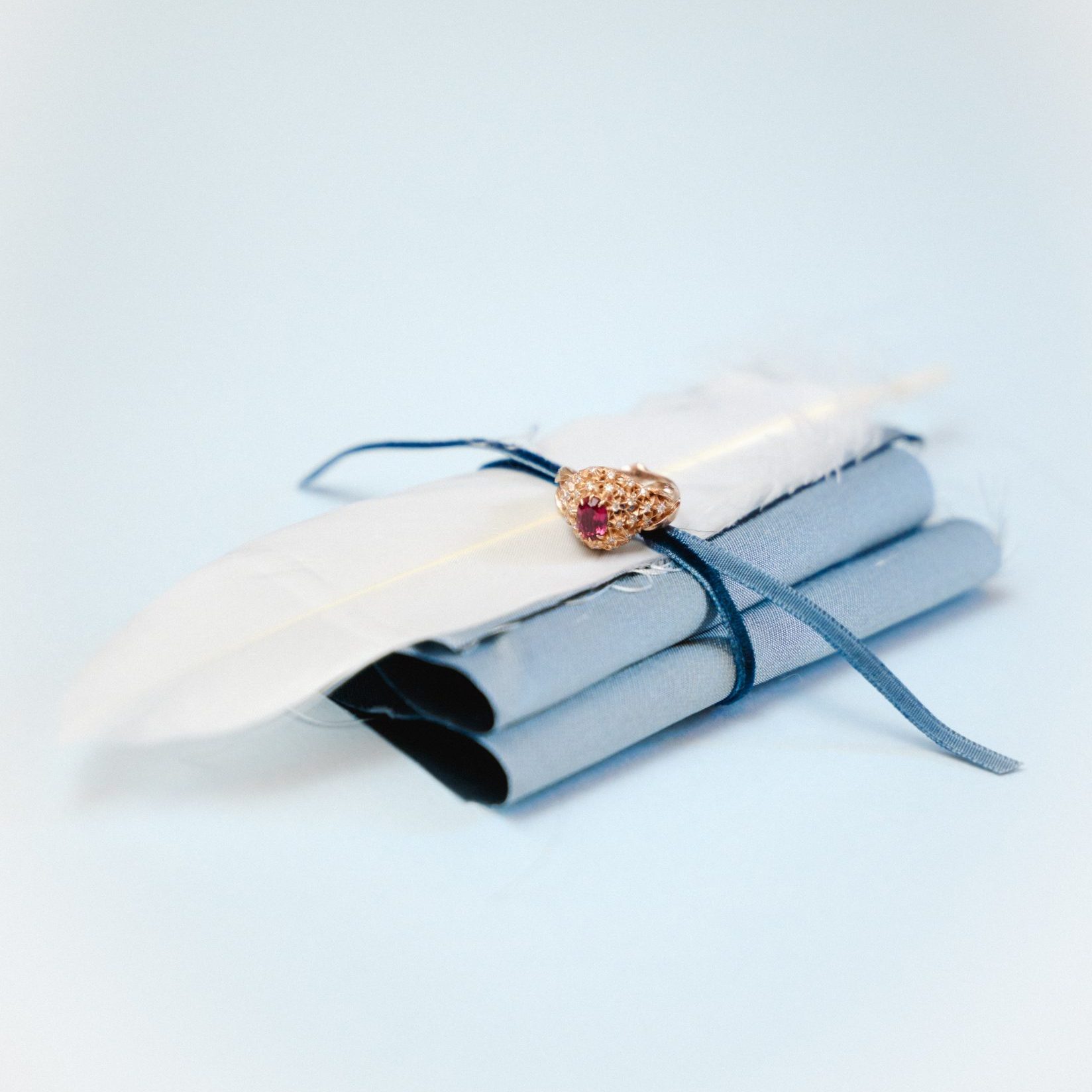
This time I also used rubies, another of my favourite stones, in the unique colour known as pigeon blood. It is a deep, saturated and vivid red with a slightly cool undertone. What makes these rubies exceptional is also their clarity. They come from Mozambique, which is now one of the world’s most important sources of gem-quality rubies. Rubies have been associated with countless stories since ancient times. It was believed that they protected their wearer and that when danger was approaching, the stone would darken or even crack. They were therefore considered protective stones and were worn by popes and kings. There were also stories about their inner light. Some stones were believed to have the ability to glow with their own light, and one was supposedly described as a shining torch. These ideas may be connected to a real property of high-quality rubies. Their red fluorescence can make their colour appear even more intense in light, creating the impression of an inner glow. When evaluating a ruby, colour is the most important factor. The most valuable stones have a pure, saturated and vivid red to slightly purplish-red colour. Transparency and clarity are also very important, as rubies without significant visible inclusions are exceptionally rare. Morganites, which are almost luminous pink, also come from Mozambique. I chose morganites for the collection because they are considered stones associated with relationships.
How should one wear jewellery with such exceptional gemstones?
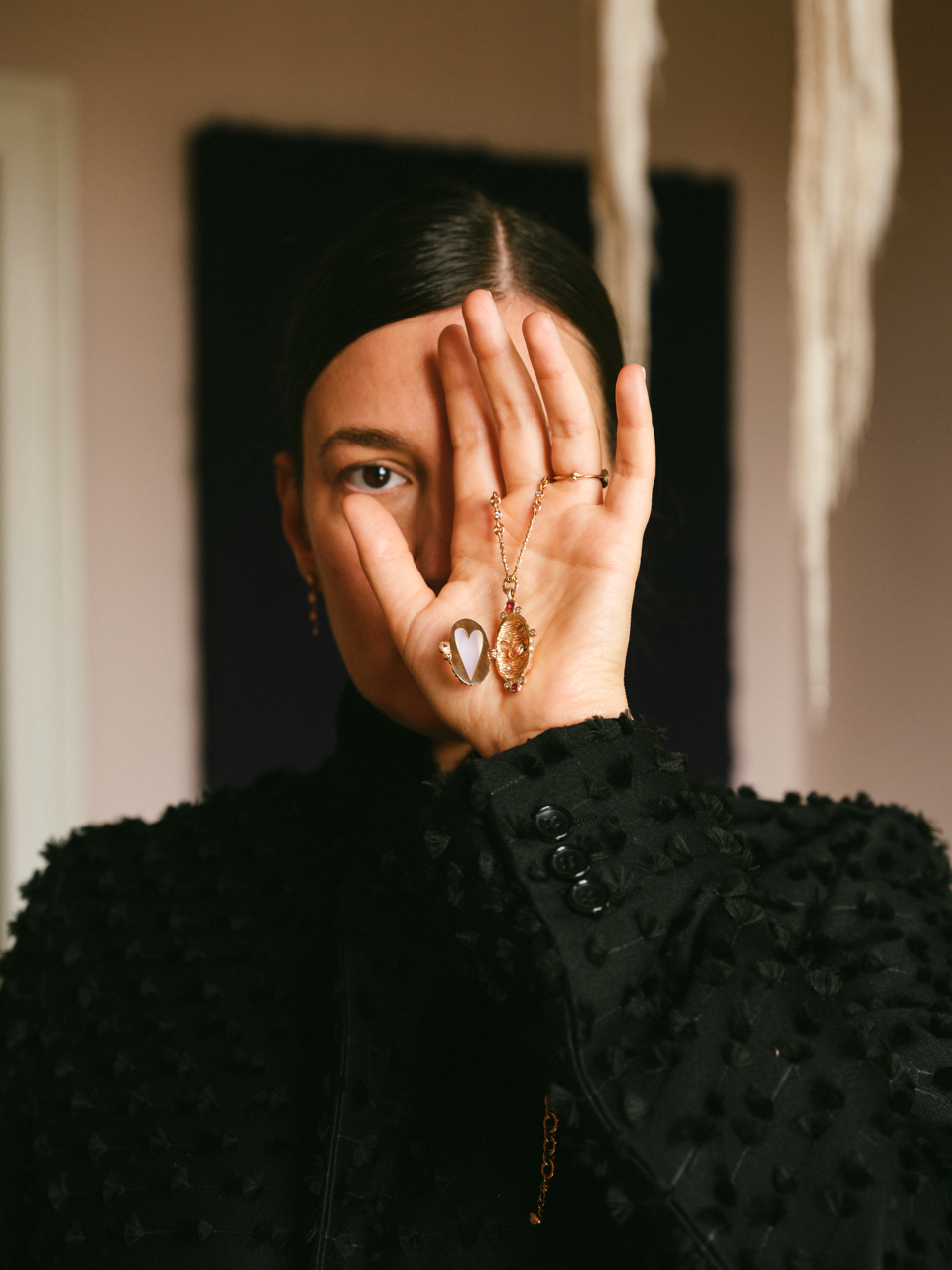
That is up to each person, but it is said that stones should touch the body. That is why, particularly in my rings, I often set stones so that they extend beyond the surface. You can turn the ring towards your palm, hold the stone in your hand and touch it.
The gemstones in the collection are complemented by pearls.
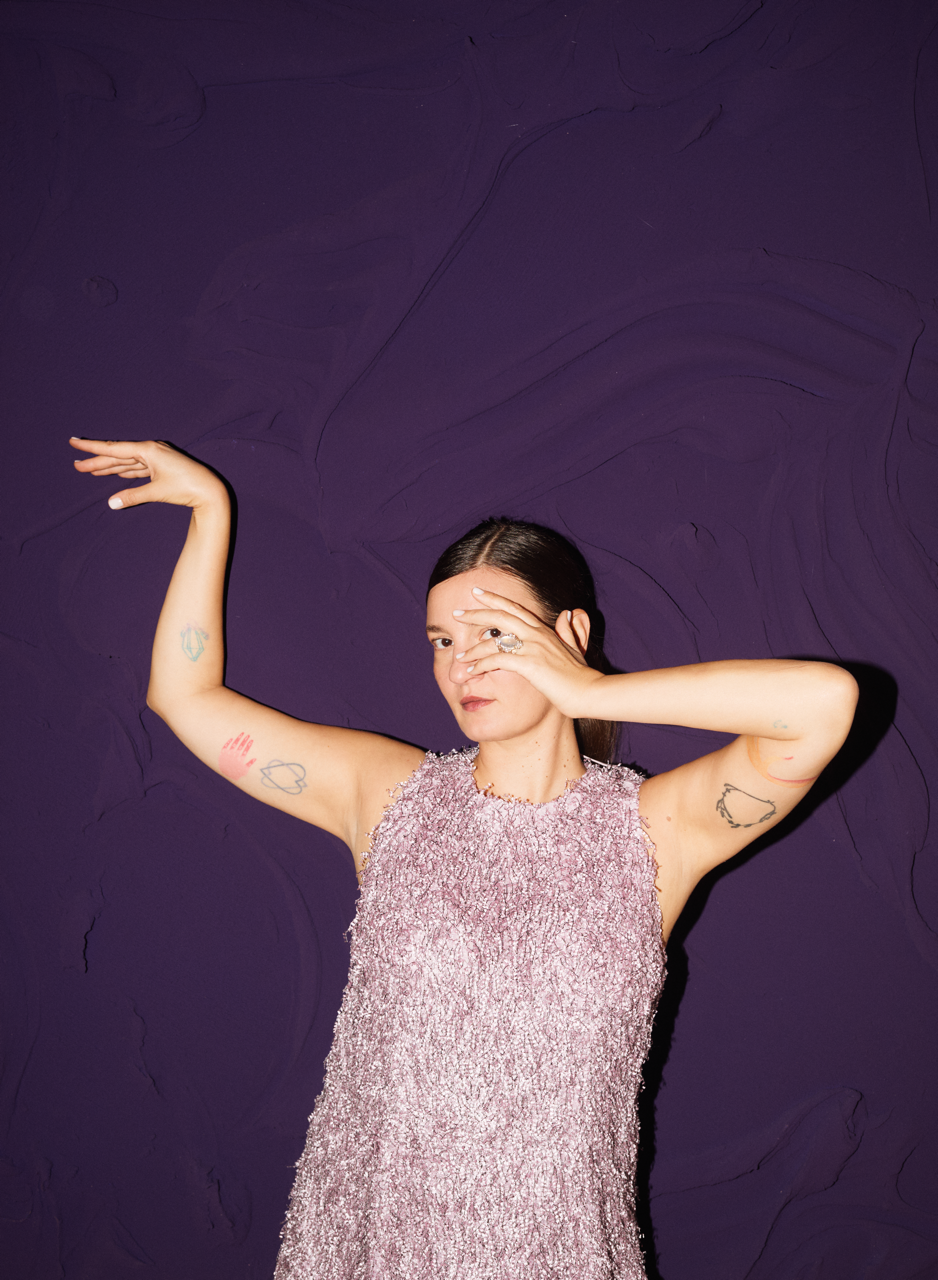
More specifically, Akoya cultured pearls, which are prized for their almost perfect roundness and exceptionally intense, mirror-like lustre. The finest ones are rare because only a small proportion achieve the right combination of regular shape, clean surface and strong lustre. And those are exactly the kind we have in the collection. Their symbolic meaning also resonates with me. Their formation inside an unassuming shell was seen as something extraordinary and was associated with the soul’s journey towards perfection or enlightenment. A pearl is born through the meeting of water and sky. It is the result of two different environments and forces coming together, creating something new. In Western culture, the pearl was also astrologically associated with the planet Venus. Just as the pearl comes from the sea, the goddess of love, according to ancient mythology, was born from sea foam. And the mineralogist George Frederick Kunz compared the relationship between the diamond and the pearl to that between the Sun and the Moon, as I read in his 1913 book The Curious Lore of Precious Stones. He described the diamond as the king of gemstones and the pearl as the queen of gemstones. For him, the diamond represented courage and invincibility, while the pearl represented modesty and purity. This is, of course, a historical perspective, but the connection between the diamond and the Sun and the pearl and the Moon is important to the meaning of the collection. Pearls are symbolically associated with love, fidelity and lasting relationships. In this way, they also connect to the symbolism of the swan and to the theme of a relationship based on long-term closeness and mutual devotion.
Why is the collection called Albedo?
Albedo is a Latin word derived from albus, meaning white. In science, it refers to the proportion of light reflected by a surface. So it is not simply about whiteness, but about the light we receive and reflect back. In alchemy, Albedo is the stage that follows Nigredo – the blackening, decomposition and disintegration of an old form. It represents whitening, purification, clarification and illumination. It is not a final state, but a moment of transition, when something new begins to emerge after something has disappeared, still without a fixed form. Albedo is therefore associated with water, dew, reflection, the Moon and also the white swan. The swan is a symbol of purification, grace and the transition from one state to another. This connection between the reflection of light and inner transformation is what interests me about Albedo.
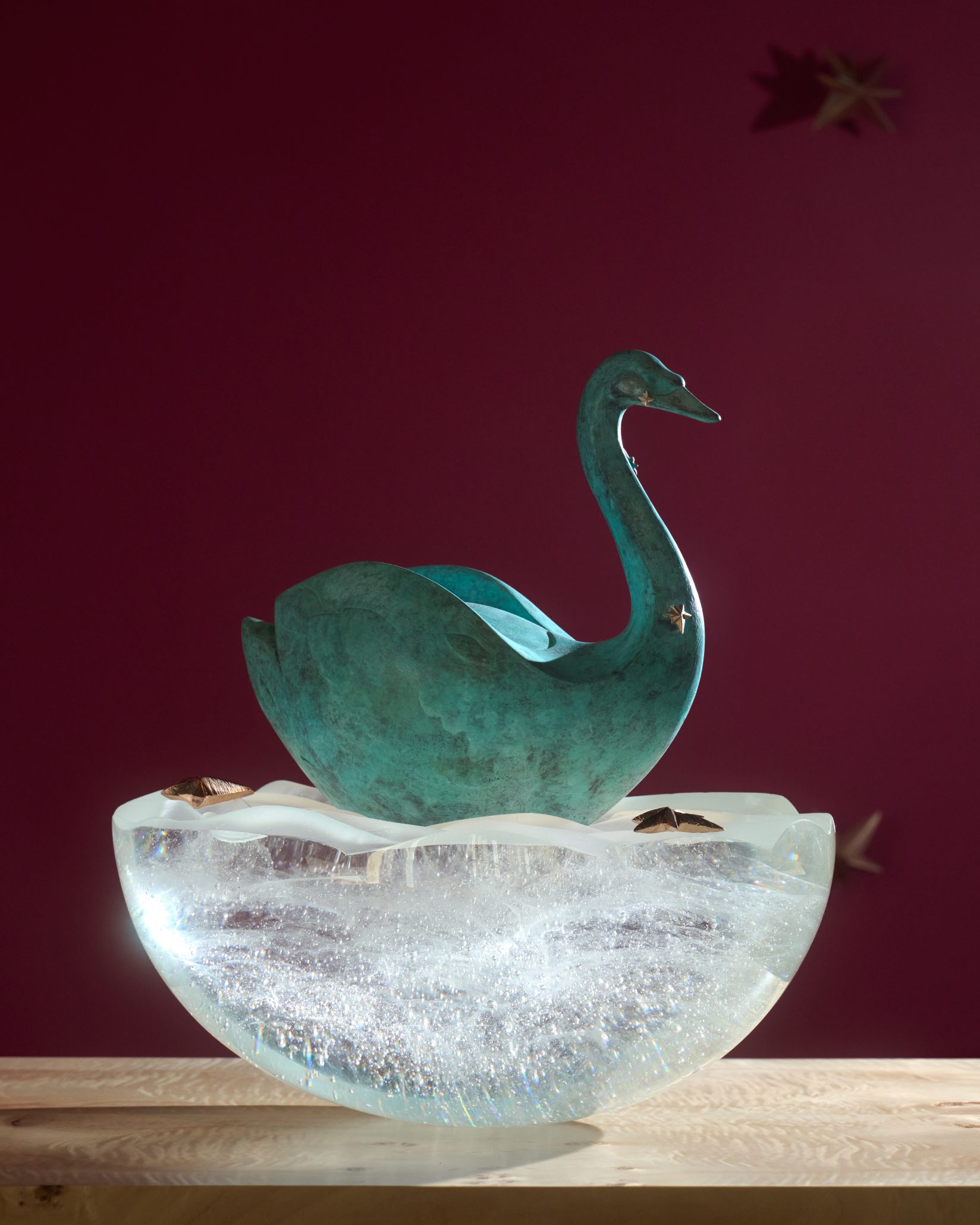
Alongside the jewellery collection, you have also created three new objects that will be presented at the High Craft exhibition as part of Designblok at the Royal Riding School at Prague Castle.
More than a year ago, I moved to a cottage in the Lusatian Mountains, and in doing so I also created more space for myself. This gave rise to a strong need to create larger-scale works that would have no function, but would simply carry some kind of inner information. After many years, I returned to free art. This time I worked with glass, which had been a long-held dream of mine. Some of the objects are made of bronze, which also allowed me to enter a fascinating new craft. Just as I like to work with people who are at the top of their field when creating jewellery, I wanted the same for my sculptures. I made the glass together with glass artist and expert in cast glass sculpture Zdeněk Lhotský, and the bronze with Karel Pour. In my opinion, both are the best in their fields in the Czech Republic.
What is the difference between creating jewellery and creating objects?
Whether I am drawing, creating jewellery or modelling, what matters to me is the search for form. By suddenly working on a different scale, my brain was able to rest from miniature things and think differently in space. You can get even more lost in the creative process, in the best possible sense. The process of creating a sculpture is much more time-consuming. From the moment an idea is born in your head, you draw it, then model it, retouch it – all of this requires a longer time horizon. It forces you to slow down, and I enjoyed that. It allows for a greater and deeper immersion.
And what is the symbolism behind the three objects?
All the symbols that appear in them are personally important to me and have some meaning in my life. One is a little owl hidden in a sky of sunset colours, with falling stars. I love sunsets, and I love that moment when the sky is still red and the first stars of the night begin to appear. And I love being able to watch the Perseids falling every August here in the Lusatian Mountains. The second sculpture is a swan sailing across the water and crying stars that remain on the surface. It is made of bronze with a light-blue patina that resembles archaeological finds from the sea. The third object is called Seed of Love and depicts a human palm protecting a germinating seed. It refers to the moments when I walk through the forest in spring and see seeds sprouting from acorns, beech nuts and all kinds of other things. The strength of a seed is incredible, but it is also about the fragility of a new, growing plant. It cannot grow without attention and care. Love and relationships are the same – we have to tend to them gently. Perhaps there is no need to reveal the exact reasons why I modelled these things. I would like the sculptures to tell stories, just as I tell stories through my jewellery.
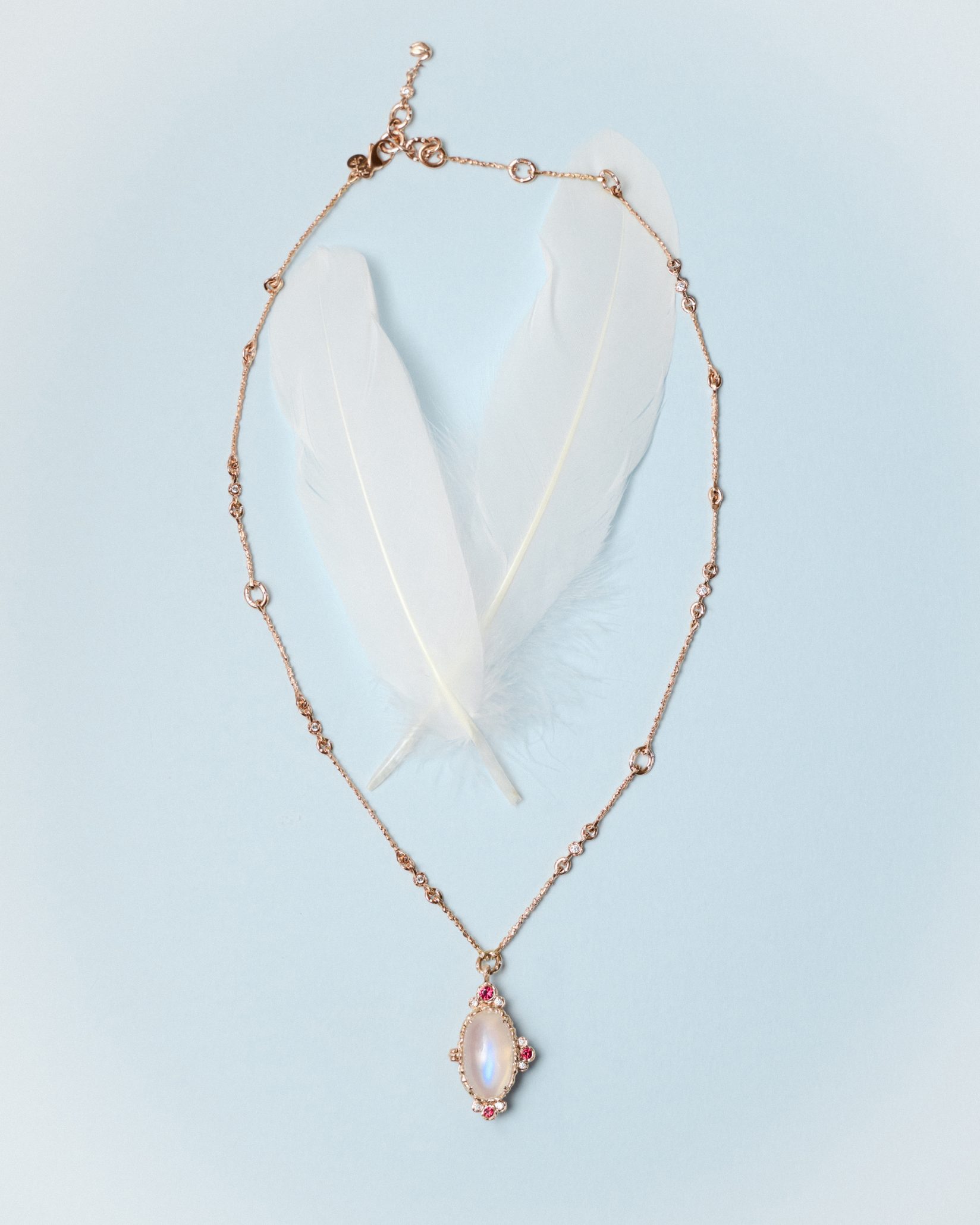
Photo: Hana Knížová, Magdalena Vojteková
