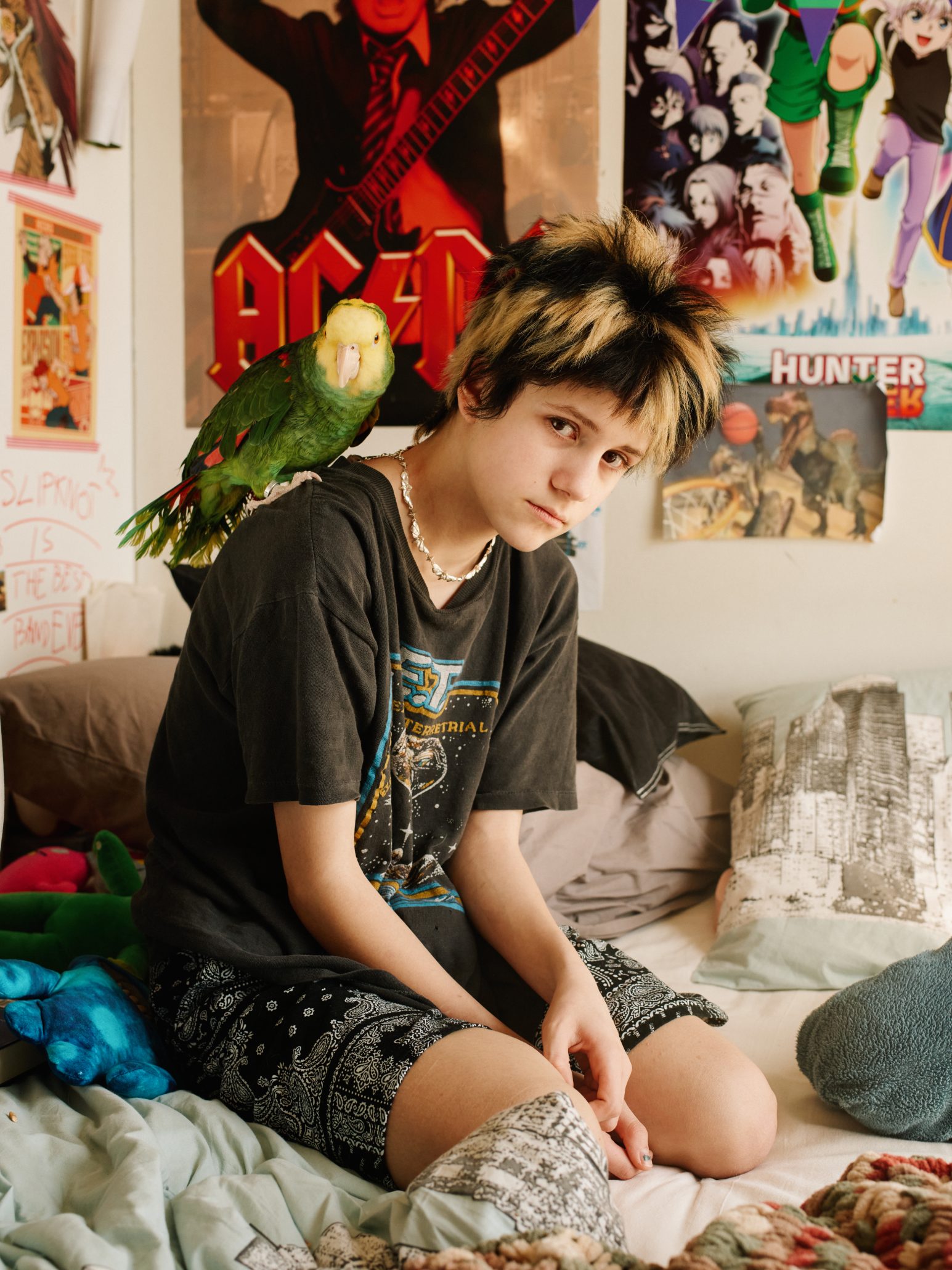
Motherhood is beautiful and fulfilling, but also fragile and demanding. To celebrate Mother’s Day, we bring reflections from three women on how to find autonomy between motherhood and personal identity, and on what forms the foundations of upbringing and love.
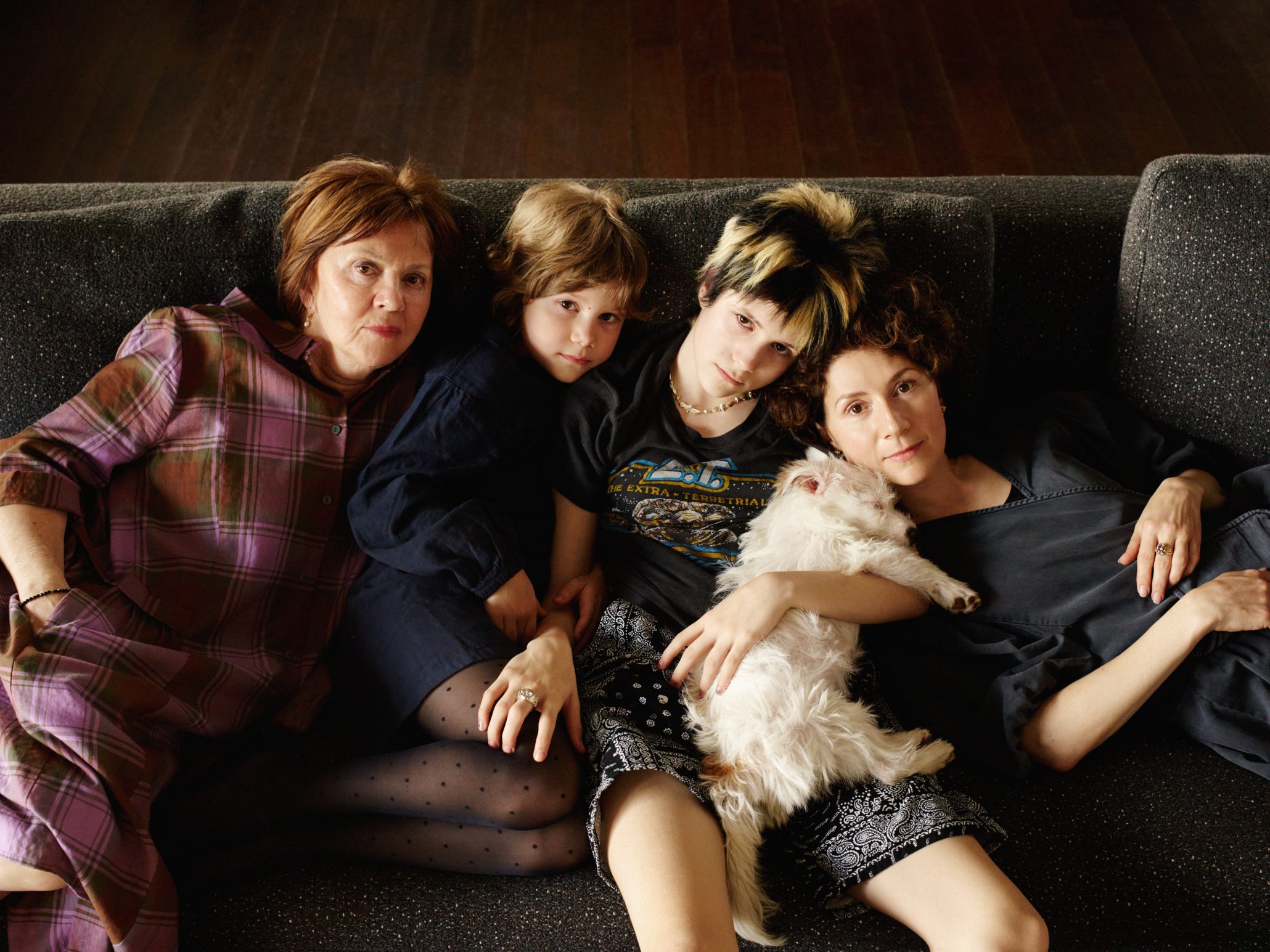
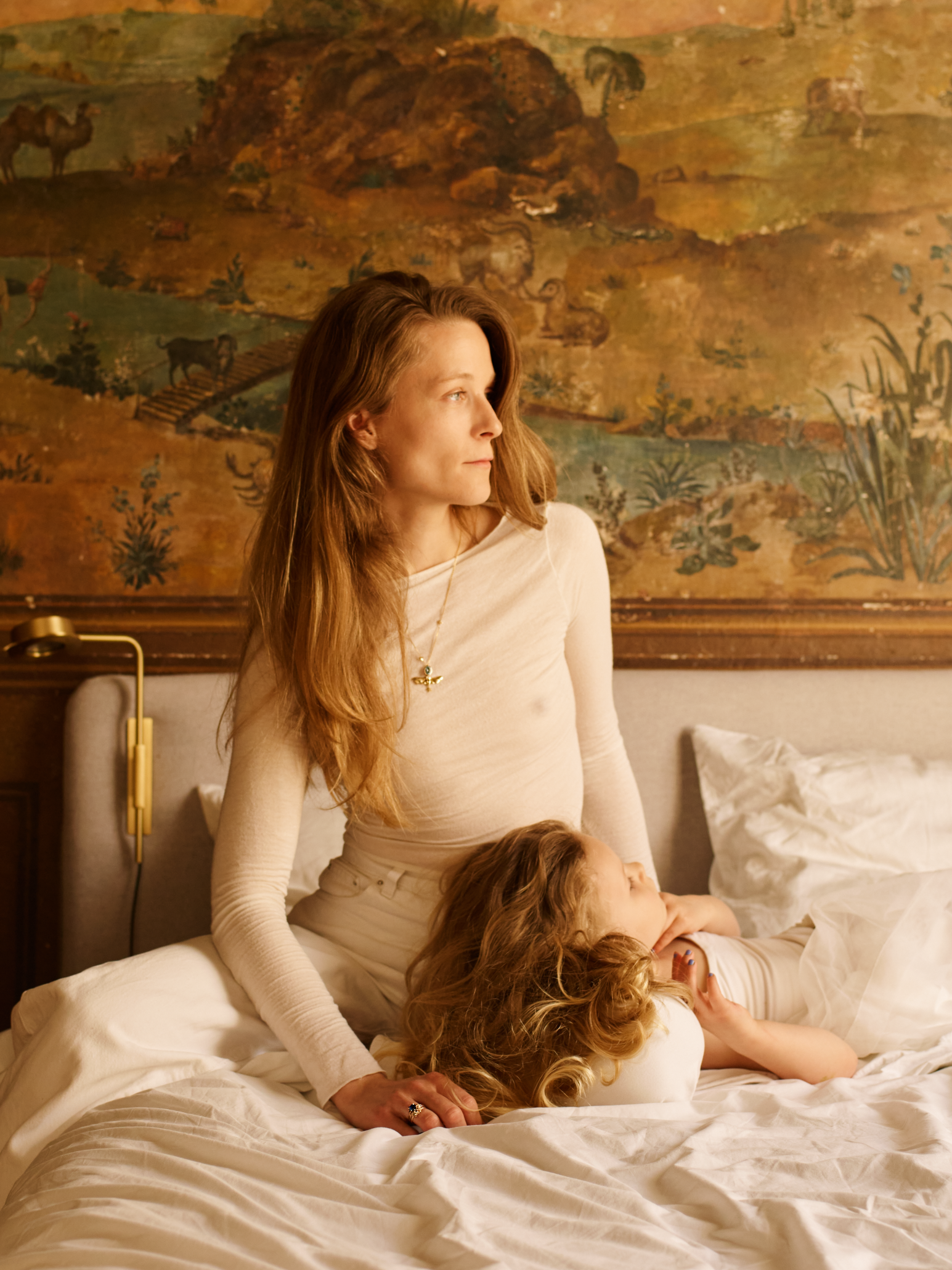
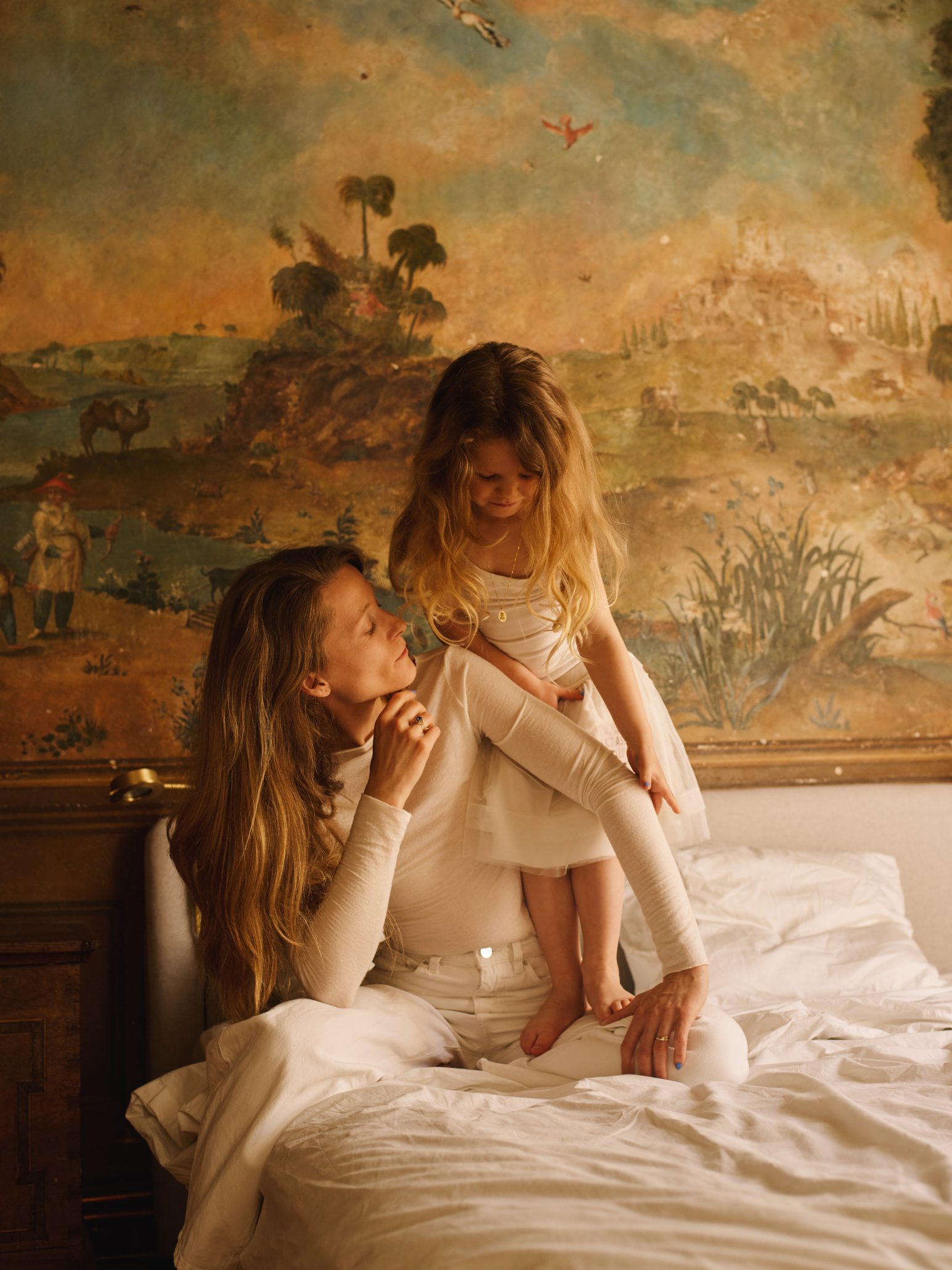
The power of shared dinners, honest reflection, and moments of forgiveness. Actress Martha Issová speaks about motherhood as a deep study of the self, and in this interview she opens up about what raising two daughters reveals to her about herself.
You are a mother of two children. What does watching them grow teach you about yourself? What have you discovered about yourself through them?
Motherhood is, in a way, a great study of oneself—at least that’s how I experience it. For example, I’ve learned that when something about my children irritates me and I wish they wouldn’t do it, I usually have to change it in myself first, because it’s something they are mirroring back to me. That happens very often. Thanks to them, I’ve also discovered that rules, structure, and regularity actually do me good; that shared dinners can help you get through many things in life; and that love is the most important key and source.
What has motherhood created in you that is new? What quality would you not have discovered without it?
I think the realization that through your behavior and the decisions you make, you become an absolute role model for someone—that this small human being watches you, loves you, and learns everything from you—has been the most fundamental for me. And I hope it leads me to live my life as well as I can in each given moment.
Do you feel stronger or more vulnerable in motherhood?
Both, depending on the moment. I know each of those feelings well. Sometimes I feel like a giant who can carry the world on her shoulders; other times I feel like I don’t even have the strength to take a breath. And sometimes those two feelings alternate several times within a single hour!
Do you feel a stronger connection to your family lineage through your children? Has your relationship with your own mother changed?
I feel that very strongly. During childbirth, I had an incredibly powerful experience where I felt almost physically connected to my grandmothers and great-grandmothers, and even much further back. That was a very intense moment for me. In the first few years of motherhood, I also forgave my parents for all the hurts from my childhood, and now I feel only deep gratitude for the love and care I received from them.
Do you have a piece of jewelry that is symbolically passed down in your family? Do your children wear jewelry?
Yes, we have several. For example, gold earrings with sea coral that I wore as a baby—and seeing them on my children always moves me.
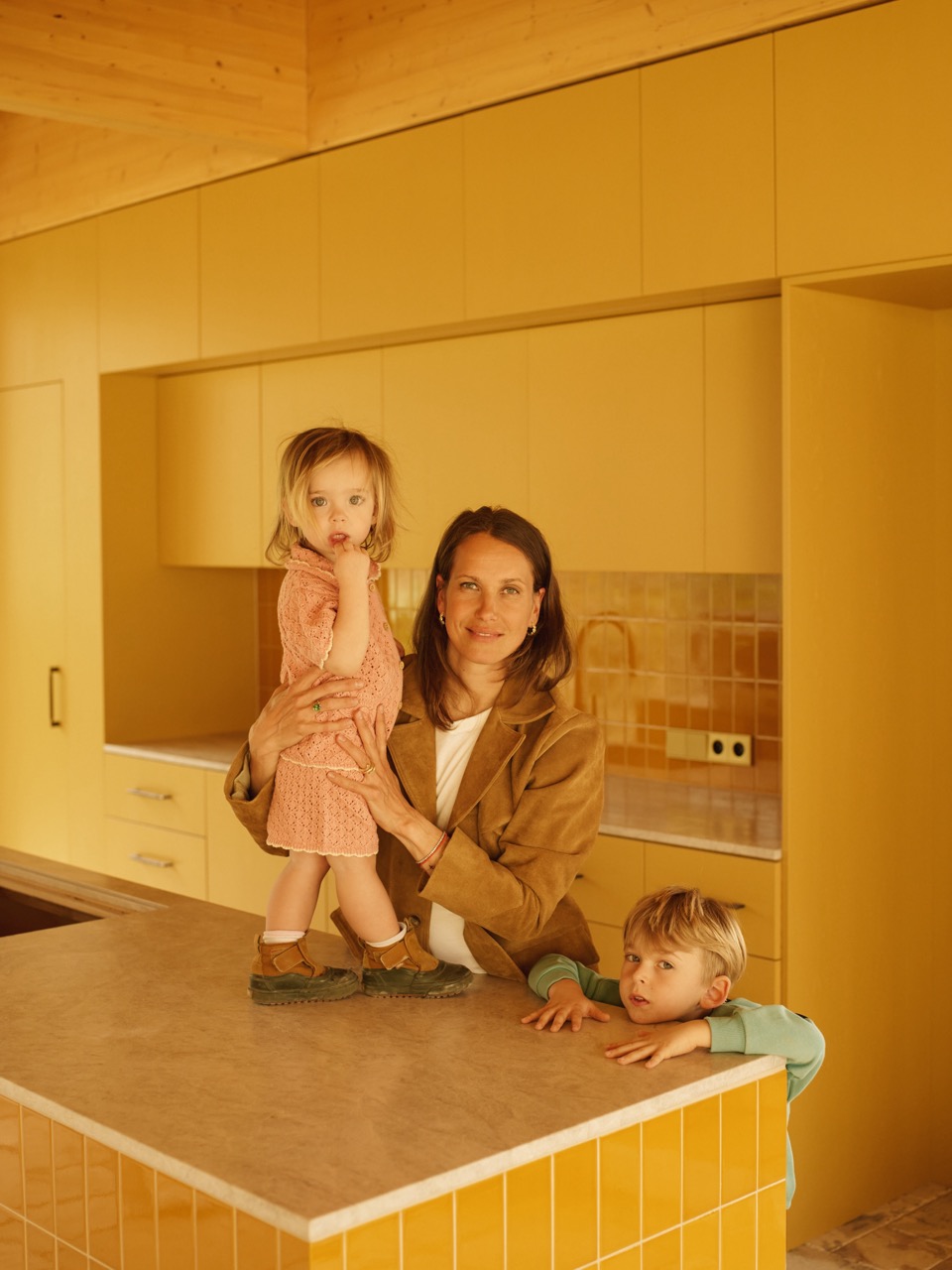
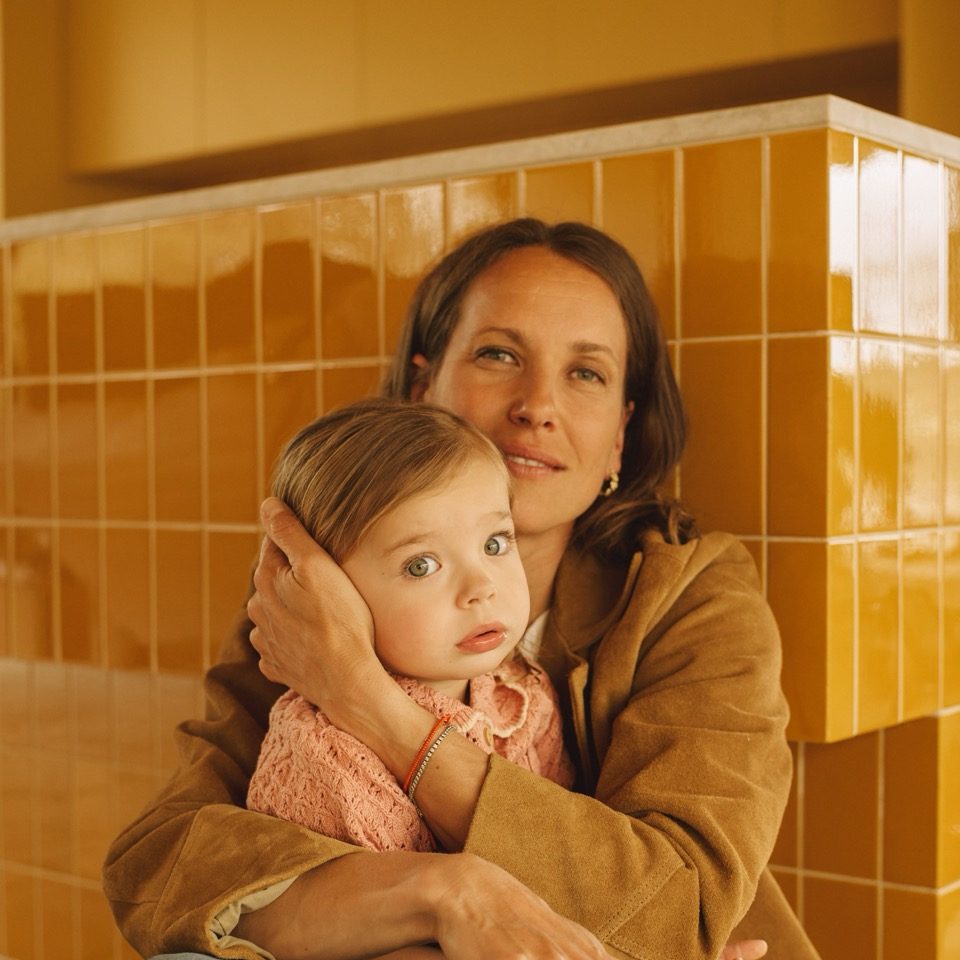
Barbora Strýcová has three pinned posts on Instagram. The first captures her as a Wimbledon champion, the second celebrates the birth of her daughter Josefína, and the third her son Vincent. She continues to prove that motherhood does not mean limitation or the end of a sports career. Currently, she is making her mark in the running world and achieved a personal best at the famous Boston Marathon.
What has motherhood brought you, and how has it changed you?
Motherhood has allowed me to be more myself than ever before. It may sound strange, but through my children I’ve gradually let go of many learned patterns and started to trust my intuition and instincts more. At the same time, it forced me to slow down in a way I would never have allowed myself. And it has taught me greater patience.
What surprised you most about motherhood? Where did reality differ most from your expectations?
How little people talk about its more challenging sides. About the depth and intensity of emotions, the fatigue, the occasional moments of helplessness. About questions like: am I doing this right, am I a good mother? You have some idea, but reality is much more layered. Not worse—just more real.
How has it changed your relationship with your body?
I wouldn’t say it has changed fundamentally. I don’t perceive it differently than before; rather, my respect for it has deepened—for everything it has gone through and what it has accomplished.
How has motherhood influenced your work and ambitions?
My ambitions are still big, and my work remains important to me. What has changed is how I approach it. I’m more mindful of where I put my energy and whether it makes sense alongside family life.
Do you have a piece of jewelry that you associate with motherhood or a particular stage of it? What story does it carry, and when do you wear it?
I have a watch that I received after my daughter was born, and I absolutely love it. And then there’s a ring from Janja that resembles a tree root and symbolizes a strong sense of family for me. I wear it in moments when I want to remind myself of that and reconnect with that feeling.
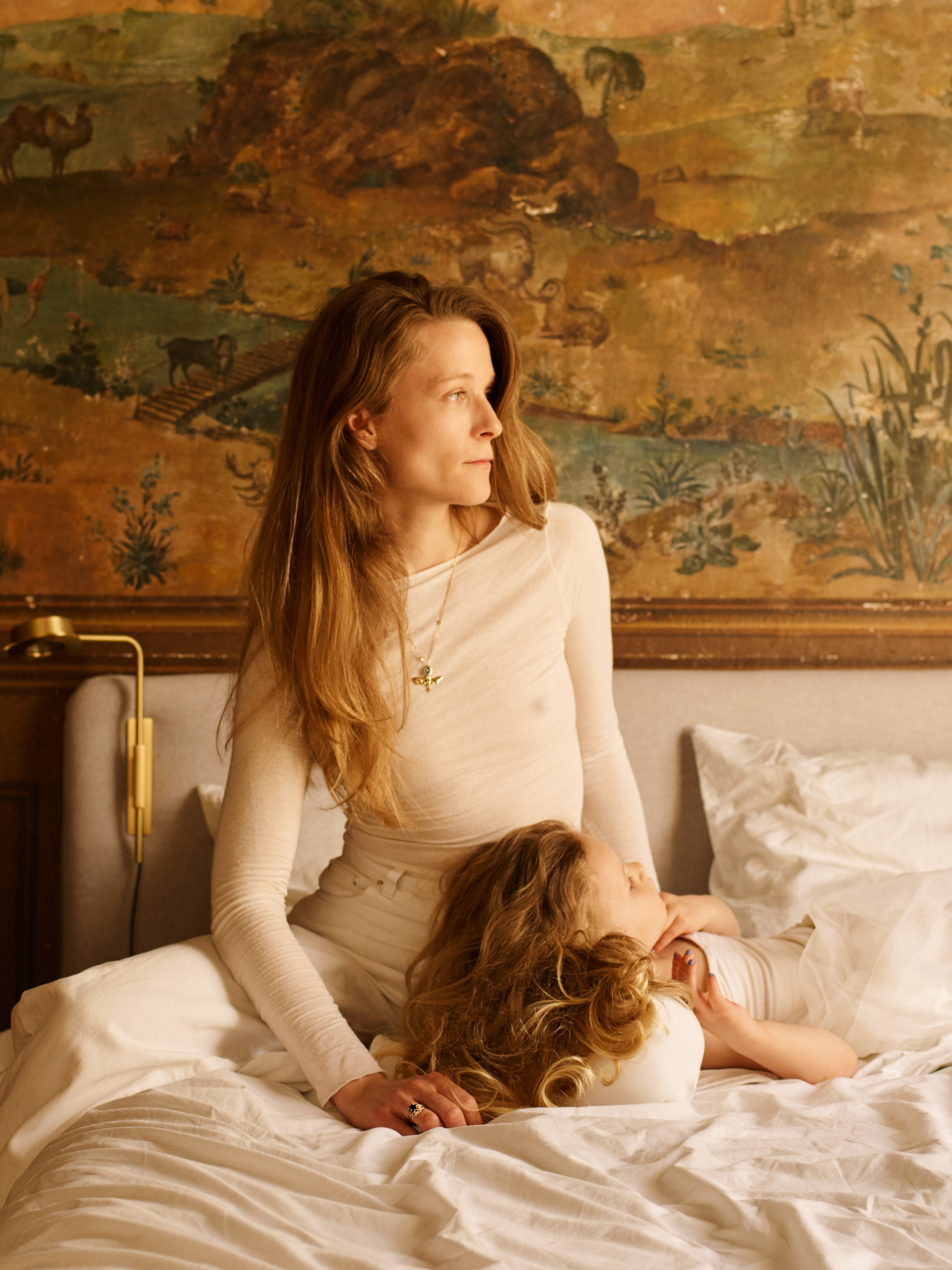
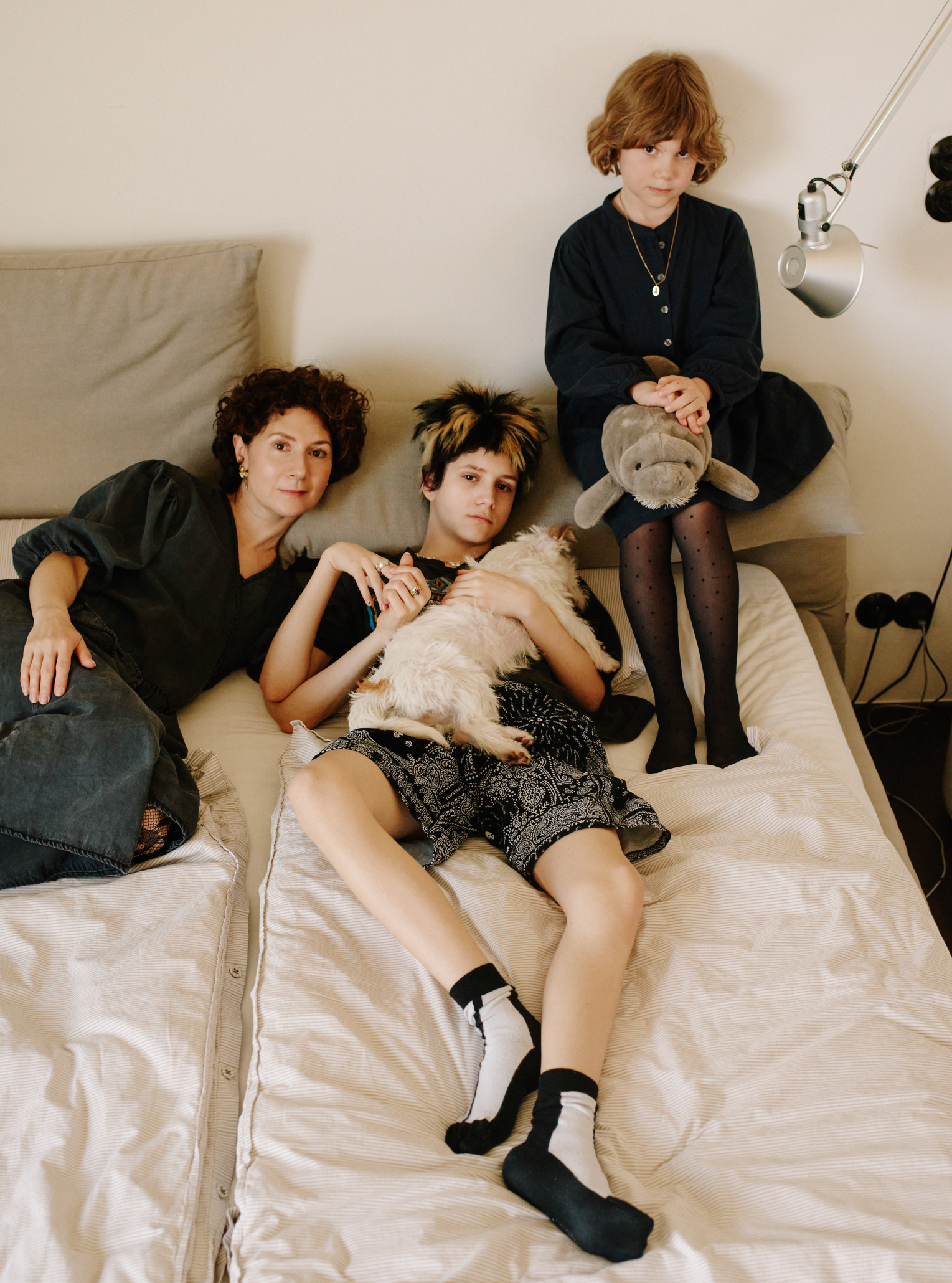
Emma Hanzlíková is an art historian, curator, and author who has long worked at the intersection of exhibition practice, writing, and working with art collections. She is a curator of the collection at the private 8smička Foundation in Humpolec. Alongside her curatorial work, she is also part of the family publishing house Meander, which specializes in visually exceptional books for children. She lives in Prague with her husband and their three children.
How is it that children who have the same mother and father can be such different beings?
I notice the difference mainly between my sons and my daughter. Hubert and Arne are sensitive and perceptive, but they don’t have the same kind of empathy as Karla. At the same time, the boys don’t dare to do to me what she does. My grandmother used to say to my mother, “Your daughter will pay you back one day.” And my mother then said the same to me. A daughter somehow defines herself in opposition, but I reject this idea of “paying back.” I feel the need to break this chain within the family, so I’ll probably deprive Karla of that line forever.
How can you combine motherhood, work, academic life—and not go crazy? How do you find balance?
I don’t want anyone to take me as an example. It can be combined, but there’s no universal path. Sometimes it’s quite a wild ride inside my head. On the other hand, when I tried the version of being only a mom—going to playgrounds, doing laundry, cooking, playing board games with the kids, practicing piano with them, and driving them to activities—it didn’t feel entirely like me. I never had a traditional maternity leave, but I do honor holidays. During the summer, I always try to be with my children as much as possible. There have also been harsh moments when I was playing with Lego with one hand while fighting a deadline on my computer with the other. There’s nothing to boast about—I brought it on myself.
It helps me when I read, work in the garden, or go to church. I like swimming, playing tennis, and running. My husband and I also have evenings when we go out just the two of us. Tuesdays aren’t popular with our children—but they are with us. Sometimes I need to be completely alone. When the children were little, my husband would give me “weaning trips”—I went to Korea, Luhačovice, or New York.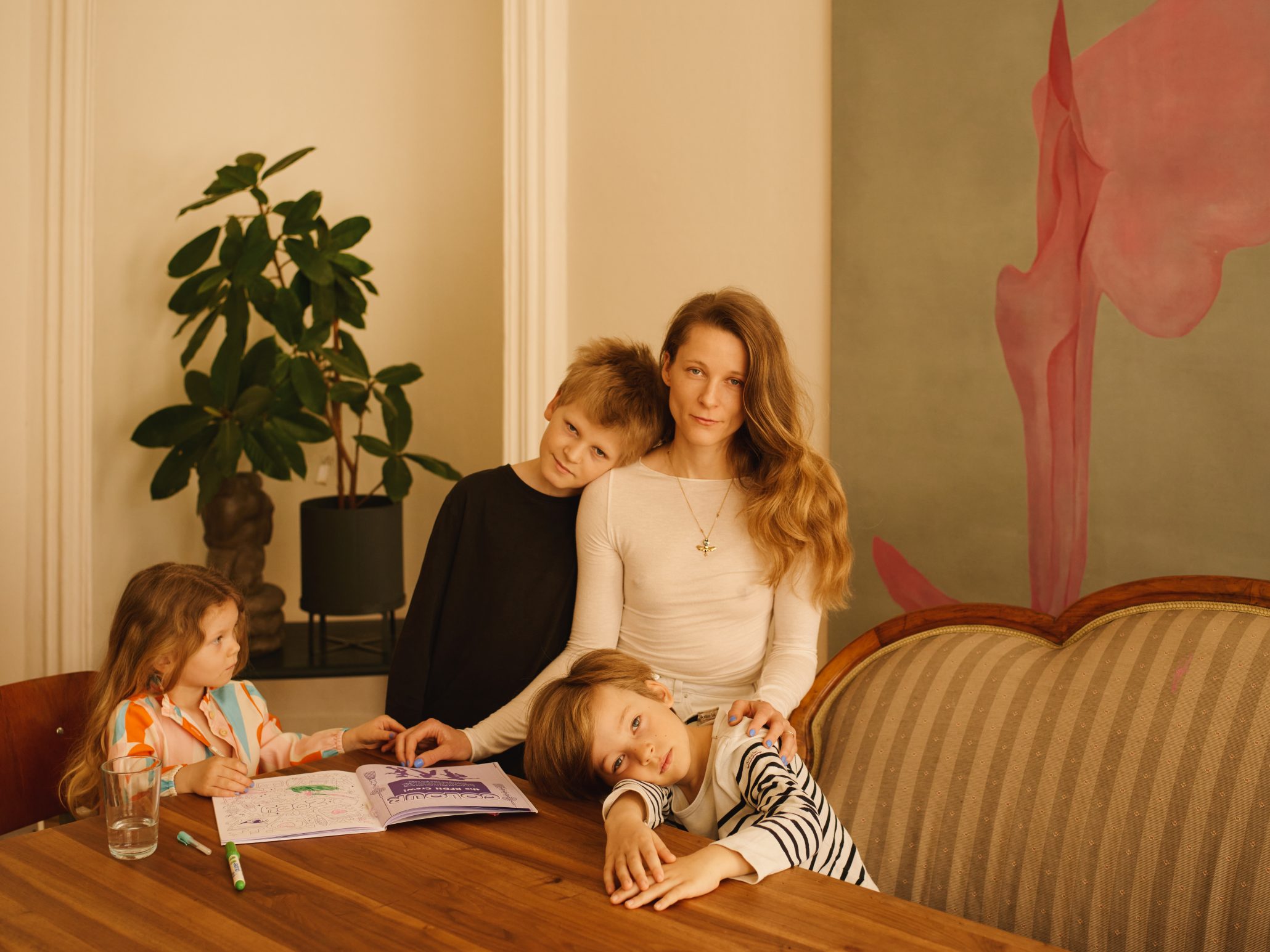
What have your children taught you about the world? In what ways have you become better thanks to them?
I enjoy traveling the world with them. I take them with me often, even on work trips, and I try to find a balance so that it’s enjoyable for both us and them. I refuse to spend time only on children’s attractions. This May, we’re going together to the Venice Biennale.
But I would never dare say that I’m a better person thanks to my children. I’m not very patient, but perhaps I’m at least more careful now. Karla always tells me, when I’m squeezing her hand and dragging her to kindergarten in the morning because we’re late: “Mom, life doesn’t rush!” I really love that.
Do you associate motherhood with a particular piece of jewelry? Do you see jewelry as a memory or a talisman?
My mother used to wear a gold locket with a red ruby. It was hard to open—she almost broke a nail every time—and inside was a black-and-white photo of my father. I’d like something similar, just as a triptych, so I could put photos of all my children in it.
She also often wore a silver hollow boot on a chain, which I used to stick my finger into when I sat on her lap as a child. It seems symbolic to me that children remember their mothers through jewelry. It hangs around their necks like necklaces or wraps around their fingers like rings.
I often consult my children about which piece of jewelry I should wear. When a diamond fell out of my engagement ring, they experienced it even more intensely than I did. I wonder which pieces of jewelry will stay in their memories of growing up with me. So in a way, it’s more a memory for them than something I consciously create for myself as a mark of being a mother. I had pink coral brooches made by Janja. From one large cluster, a piece was cut for each of us. The inspiration came from Renaissance paintings of the infant Jesus, where he wears a coral bead as a protective amulet.
Foto: Hana Knížová
