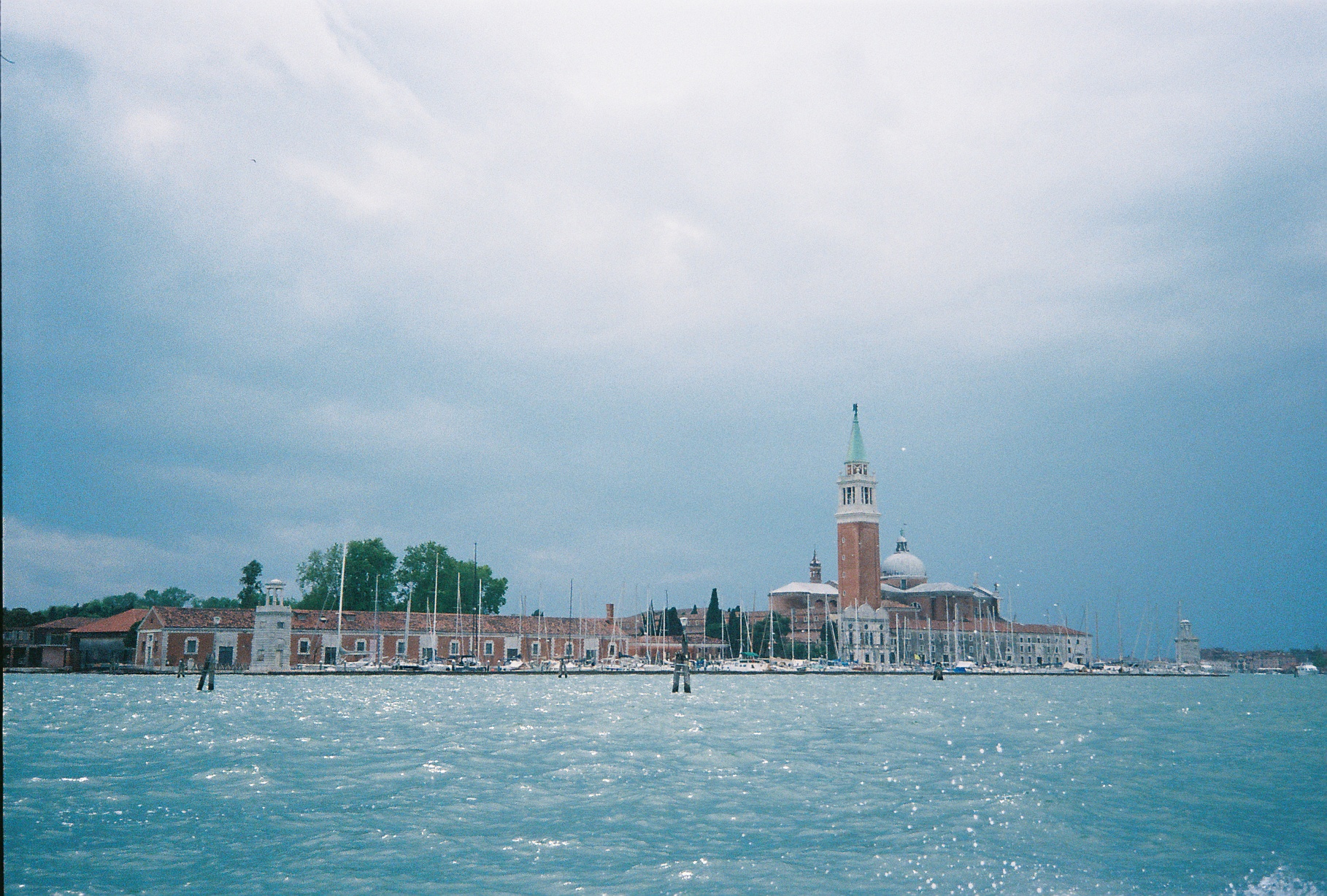
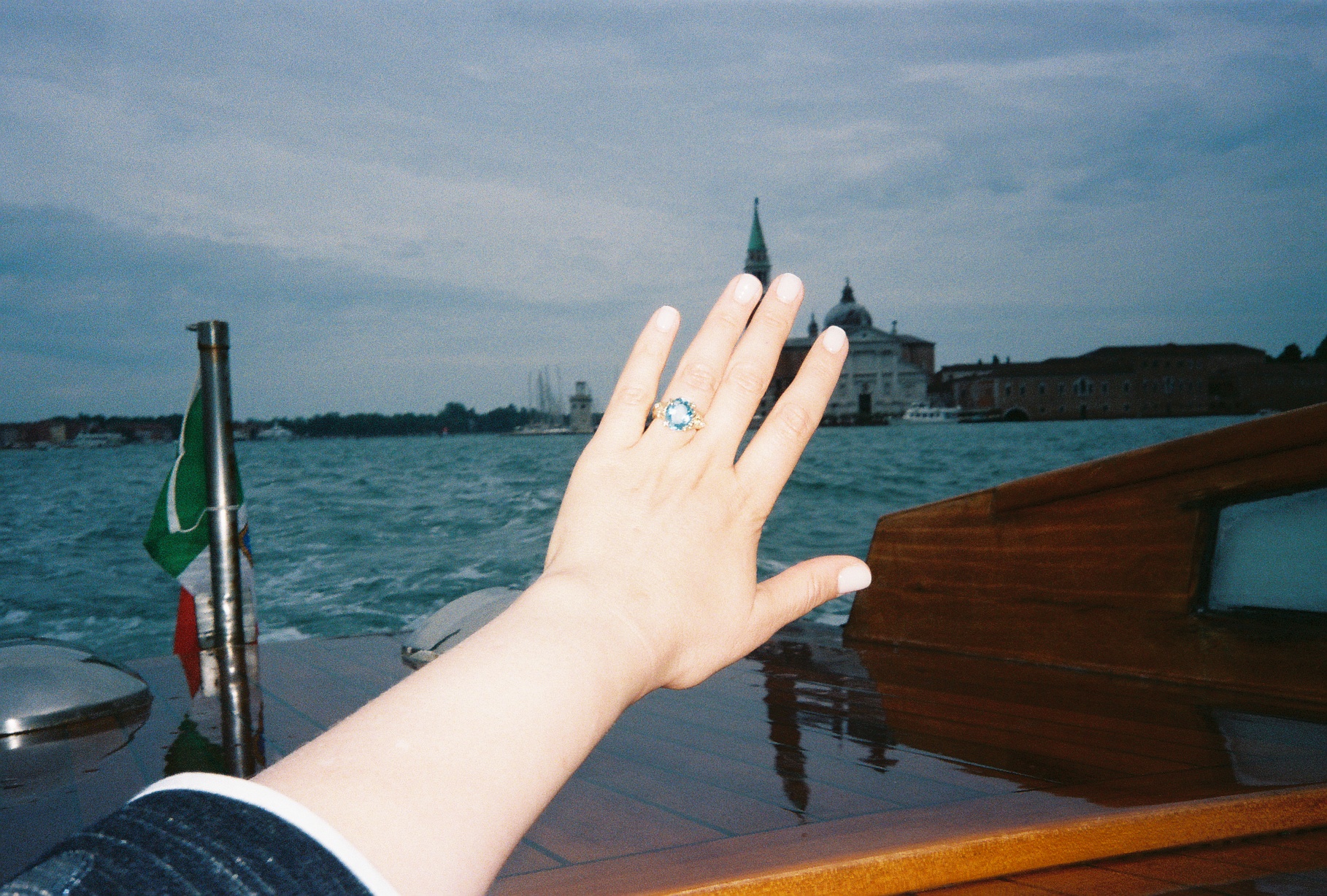
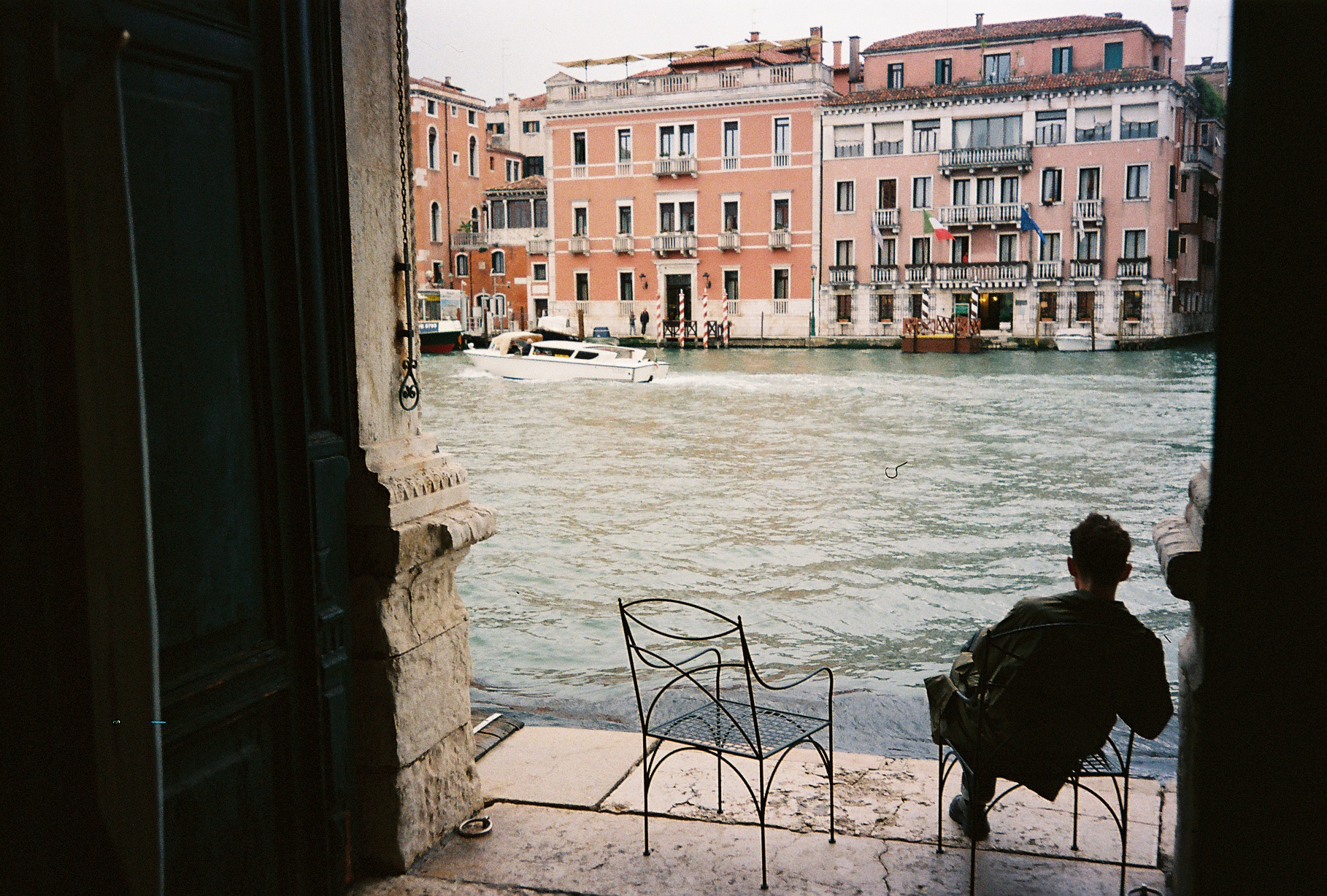
What brought you to Venice this year? Was it the Biennale? What stood out to you the most?
I mainly travel to Venice for the Biennale. I return almost every two years, and this year was no exception. I arrived for the opening and managed to attend several exhibition openings, including the inauguration of the Czech Pavilion.
This year, I was especially captivated by the Georgian Pavilion and its installation of flying carpets—it was absolutely extraordinary. But what I also love about the Biennale is that it’s a place where I regularly reconnect with friends I rarely have time to see back in Prague. It always leads to wonderful dinners together or long walks along the canals. Venice is simply a remarkable city, and I truly believe everyone should experience the Biennale at least once.
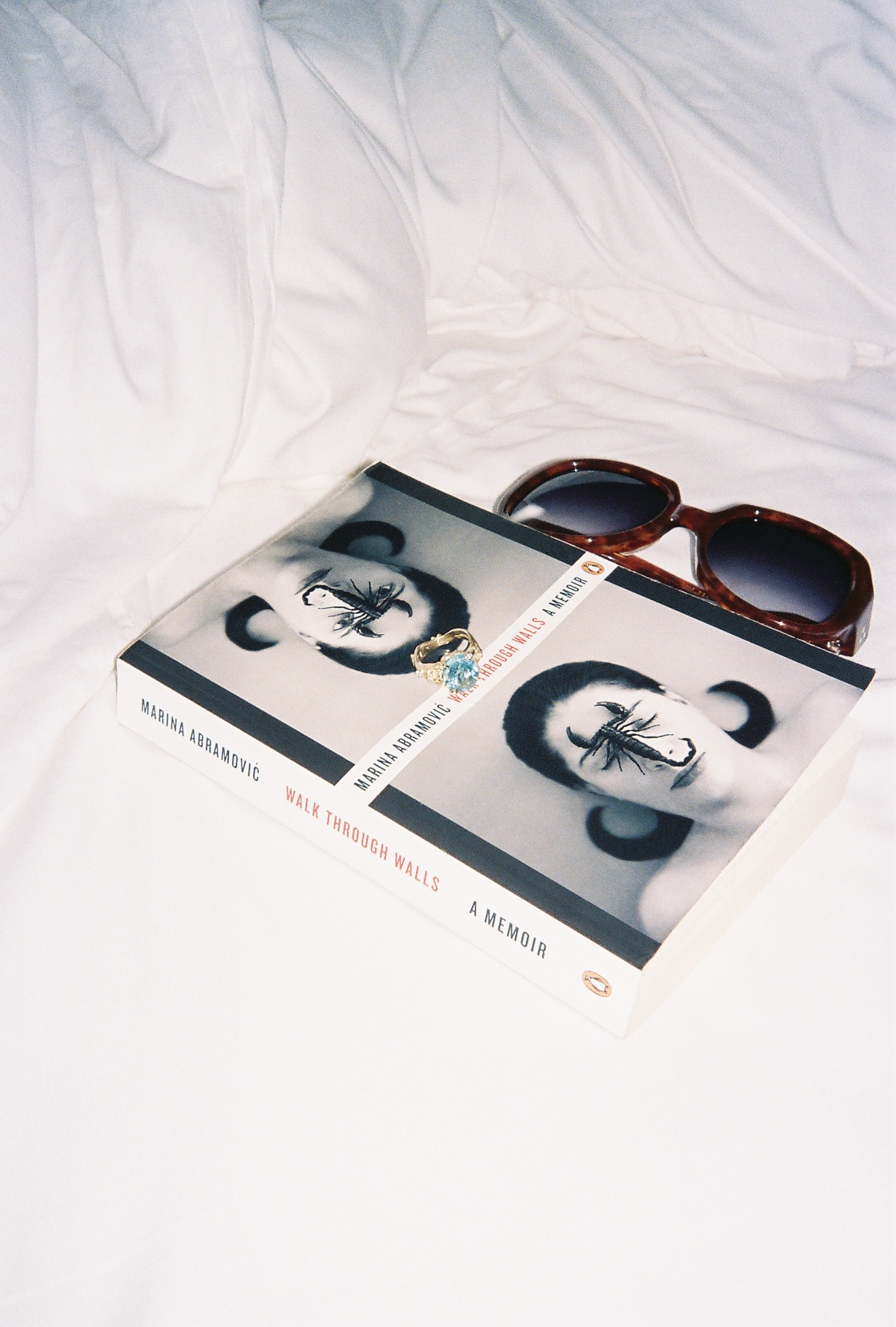
In one of the photographs, your ring is resting on a book about Marina Abramović. What does her work mean to you?
Marina Abramović is one of the most important artists of our time in my eyes. I’ve admired her since childhood, and she has had a profound influence on the way I think about art today. She showed me that it’s possible to create on your own terms, according to your own convictions, without conforming to what others expect of you. That realization was incredibly important to me, long before I began making art myself.
I admire her entire body of work, from her early performances in the former Yugoslavia to her most recent projects. Perhaps I feel an even deeper connection to her because I also come from Serbia, so her story resonates with me on a personal level.
The book in the photograph is her memoir. It was a gift from my friend Valerie Horvát, and I found it completely absorbing. It’s written with the same honesty and intensity that define Marina herself. I was fascinated by the way she describes both the circumstances behind the creation of her works and her own life experiences.
Her travelling retrospective, which I saw in Vienna, also left a profound impression on me. It was an incredibly emotional experience. I’m currently in Berlin and planning to visit her latest exhibition. Among the many remarkable female artists I admire, Marina Abramović remains one of the most important.
Is there a place in Venice that you return to every time, even though you already know it well? What makes it so special?
I always enjoy returning to the places I associate with the Biennale. One of them is the Pinchuk Collection, whose exhibitions are, in my opinion, consistently among the very best presented during the Biennale. It’s always one of my first stops.
This year I was also fascinated by the newly opened Fondazione Dries Van Noten and its beautiful inaugural exhibition, The Only True Protest Is Beauty. It was conceived as a contemporary cabinet of curiosities, where contemporary art, design, fashion, and jewellery entered into a natural dialogue with one another. The entire exhibition felt deeply personal and was curated with extraordinary sensitivity.
I was equally impressed by Fondazione Prada. Nearby, I also visited SMACK Venice, where works by Lee Ufan and Alighiero Boetti were exhibited under one roof.
But that’s exactly what I love most about Venice. You can simply wander through its narrow streets, often without a map—my phone hardly ever works there anyway. Sometimes you end up in a dead end, and other times you unexpectedly discover a small gallery exhibiting works by Kiki Smith, one of my favourite artists. Those are the moments that can’t be planned, and they’re what make Venice so magical.
