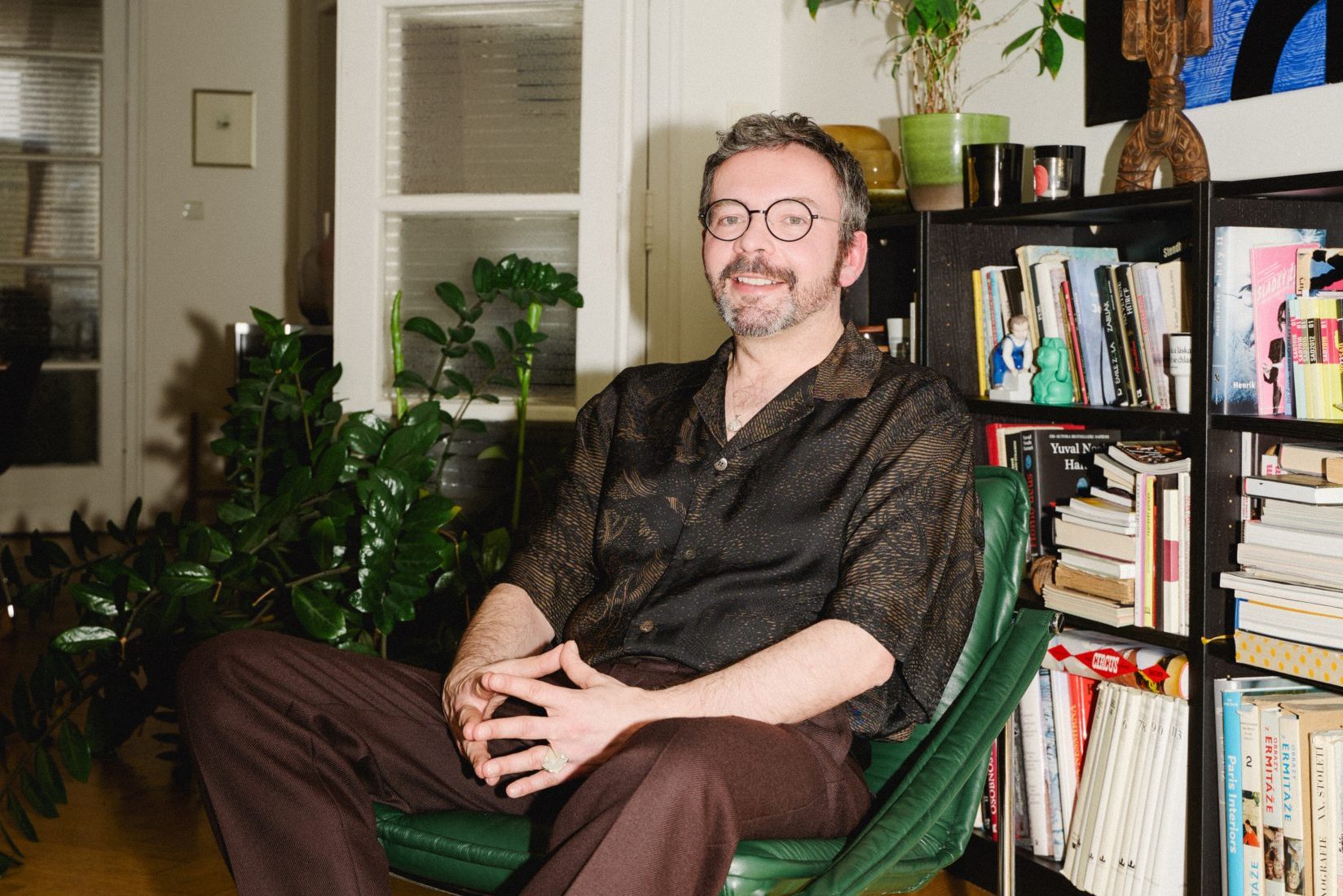
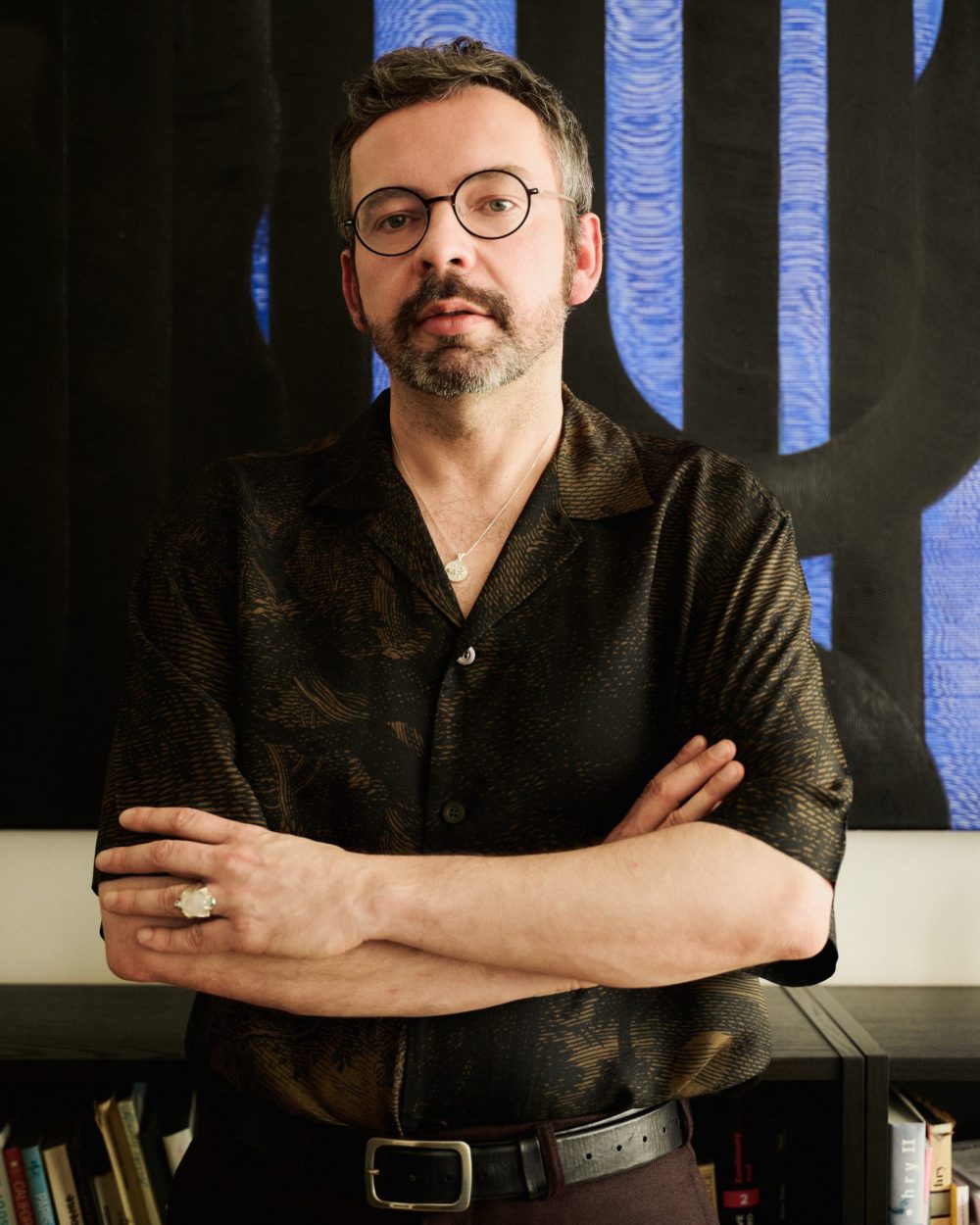
For the production ‘Časokryt’ at the Theatre Na Zábradlí, he created a scenic labyrinth working with the theme of nostalgia. Alongside a room stylized in the spirit of the 1960s, another scene transforms into minimalist contemporaneity. In the play ‘My Struggle: The Man in Love’ at the same theatre, he kept the set restrained—yet all the more effective—so that it could function as a projection surface for the actors’ monologues. Set and costume designer Marek Cpin expresses his rich imagination not only on stage. Through his visual dramaturgy, he tells stories, captivates audiences, and finds the key that touches the heart—whether you’re going to see a classical play, strolling through the center of Vienna and stopping at a Hermès shop window, or visiting the exhibition ‘Institute of Intimacy’, which explores the theme of care.
At the end of March, he premiered a production at Prague’s Dejvice Theatre, where ‘The Maids’ is being staged under the direction of Irish director Wayne Jordan. A few weeks later, another premiere will follow: ‘Bořiny Beyond the River’ at the Moravian Theatre Olomouc. Director Miroslav Krobot drew inspiration for ‘Bořiny’ from the life of the legendary Moravian traveler Jan Eskymo Welzl, and Marek is responsible for both costumes and set design.
These two premieres are also his last of the current season. Although he will then focus mainly on finishing projects for the next theatre season, shop window displays, and film preparations, it seems that May and June might surprisingly offer him a calmer pace. “I’m curious what it will do to me. Hopefully after this intense period, I’ll figure myself out,” he laughs.
You’re going through a very intense period—one premiere after another, alongside exhibitions, scenography, and brand presentations. How do you manage it all?
Sometimes I wonder myself… The truth is, I have to stay very concentrated and focused on each project and not get distracted by anything else. Even though I often work on several projects at once, I try to stay organized and avoid chaos. In theatre work, the advantage is that everything is planned and follows a precise schedule. I know exactly where I need to be and when, and things rarely change drastically. Uncertainty is my biggest fear—because that’s when everything can collapse and the whole structure falls apart. In my mind, I focus on just one thing at a time. And once it’s finished, my brain relaxes and opens up to new ideas.
How do you avoid burnout?
I enjoy it so much that I don’t perceive it as work, but as fun. My work is my hobby and my passion. And I don’t really do anything else. Since I don’t have a traditional family or children, I can devote much more time to my work—time that others might spend raising kids. During the day I usually handle organizational matters, meetings, rehearsals, visiting workshops, and in the evening, when it’s quiet and the phone stops ringing, I focus on designing.
Which phases are the most stressful for you? Is it the beginning, when you’re facing blank pages?
That’s when it could happen that I procrastinate or do unnecessary things out of fear that no ideas will come. But as soon as I sit down, my brain starts working. The most important thing is to get rid of fear. If you tell yourself you can do it, you simply will. Doubts take away fifty percent of your energy.
How do you get rid of fear?
In general, I don’t know, but for me it came as a combination of different factors. I’m at a stage where I’ve crossed into the second half of my life. I have experience, I’ve mastered my craft, and I’m not completely rigid yet. It’s my “peak,” where strength—still not declining—meets experience. That makes many things easier. Something unlocked inside me, and I no longer hold myself back.

Have you ever gone through a period when things didn’t work?
I went through a crisis before COVID. It was something like burnout. The pause during the pandemic and the realization that not everything has to go as smoothly as it once did changed my way of thinking about the world. I discovered humility and gratitude. Until then, I hadn’t dealt with existential questions—that came during the pandemic. It pushed me forward: not taking things so seriously, because everything can change, but also making the most of what I can while I still can.
Does that mean you rarely say no?
Not exactly—it always depends on the type of project. If I were offered a period historical film, I would think very carefully about accepting it. It’s extremely demanding to avoid mistakes, difficult to source things properly, and usually there isn’t as much money as in foreign productions. At the same time, we see how those productions can look when there are no limitations. And I probably wouldn’t enjoy something purely realistic either.
On the contrary, I like a certain degree of stylization and the variety of projects—from experimental and alternative to pop-cultural, commercial, and classical. I consider that a great privilege.
How do you refine your visual approach?
I don’t have as much time as I’d like—otherwise I would study contemporary trends in art and theatre much more. I would travel abroad for culture more often. But any visit to a contemporary art gallery is energizing and inspiring. And I’m looking forward to summer, when I’ll spend two weeks in Japan. I’ll enjoy it.
We’ll see what your trip to Japan brings…
It could easily happen that my scenography becomes paper-like, like origami, and costumes take on a kimono style. That happens to me quite often—something fascinates me and I try to bring it into theatre, even in Shakespeare.
Do you have any rituals during your creative process?
I calm my sensory input. I need to concentrate and I need silence. And a scented candle—I love fragrances and burn them all the time.
Today you’re mainly a theatre set designer, but a few years ago you were a fashion director for magazines. How do you look back on that period?
It was an intermediate stop that lasted fifteen years. I’ve always loved fashion. I don’t see it as something separate or a different field—fashion belongs to theatre and flows into it. Beautiful aesthetic things have appealed to me all my life. Fashion editorials also create a kind of artificial world. Just like on stage, there is a play with reality. These worlds intersect. I still love fashion—I enjoy dressing well and buying clothes. I’m a set designer in my own interior and a costume designer in life. I enjoy playing with styles, transforming myself, and adorning myself.
What is your relationship with jewelry?
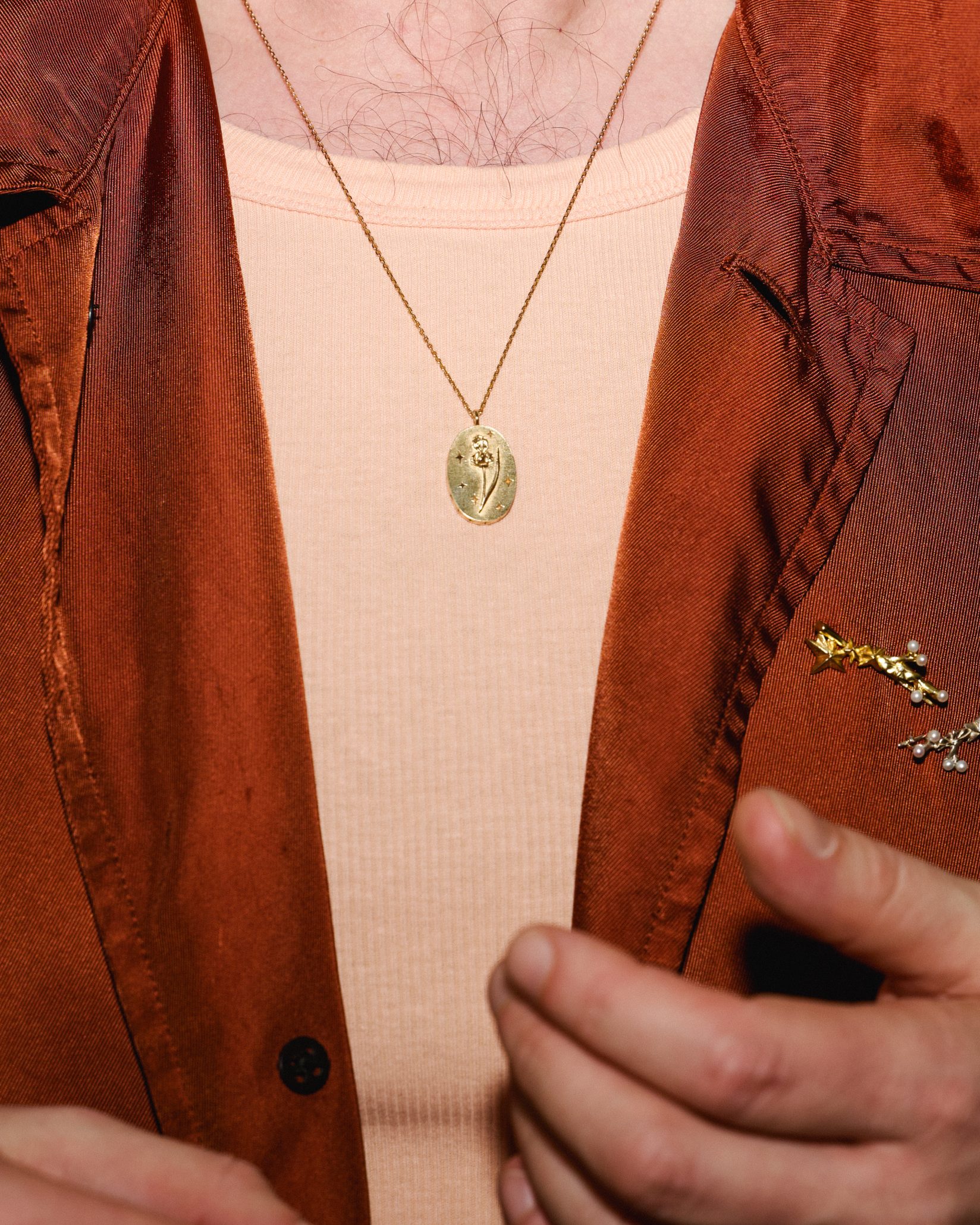
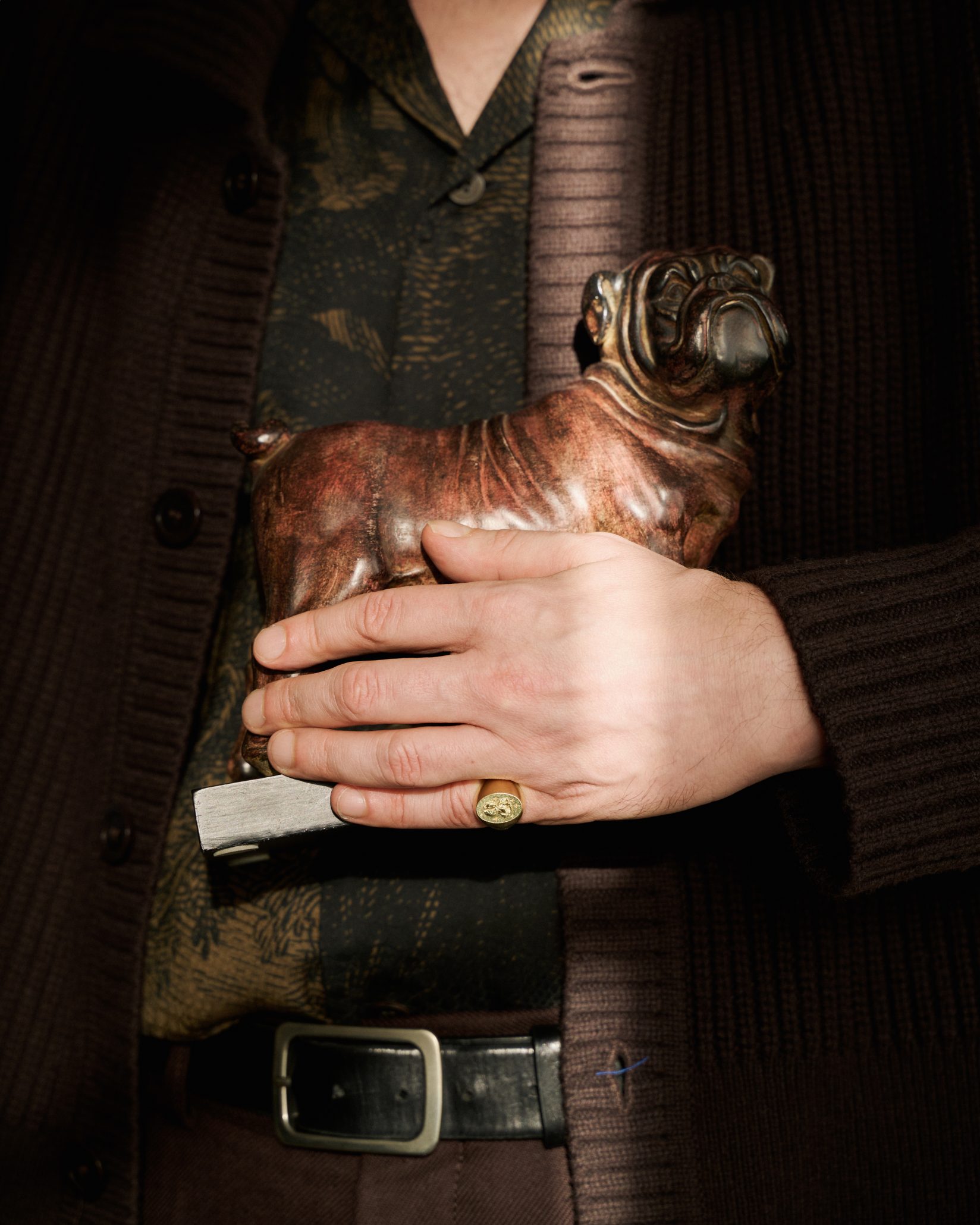
I like jewelry, but I only found my way to it relatively recently. I’ve never deeply understood it—I go by feeling: whether I like it or not, whether it speaks to me or not. I don’t own much jewelry, but the few pieces I have mean a lot to me. I like it when there’s a story behind a piece—whether it’s the history of a global brand or a personal connection, like when I know the designer, as in the case of Janja Prokić. Then I have a special relationship with it. I’m unlikely to be drawn to something I don’t know—personal connection matters to me.
What specific pieces do you wear?
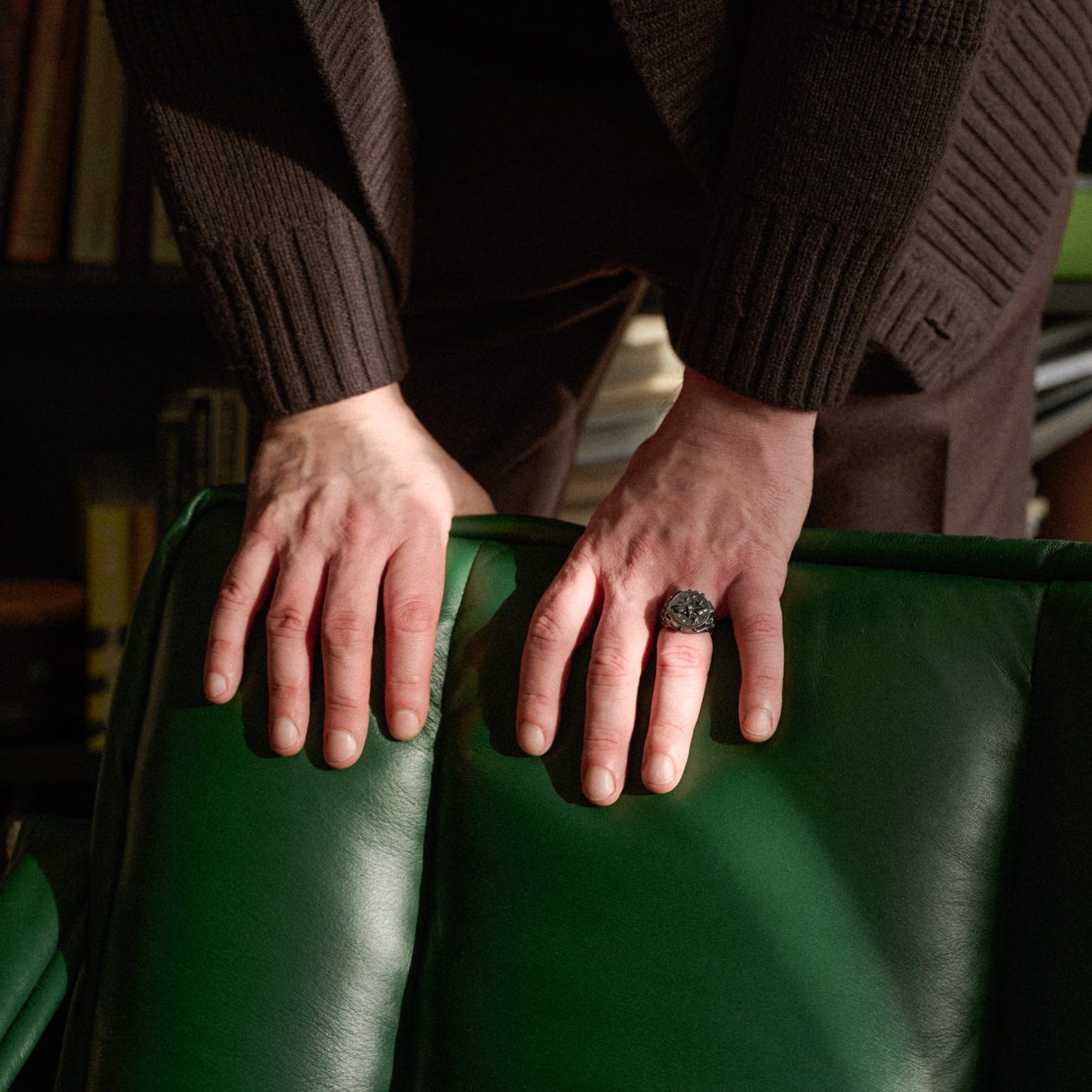
I have two rings—one I wear daily. And I wear a watch all the time. Occasionally I wear a pendant. I don’t overdo decoration. I’m at an age where I don’t want to look excessive or ridiculous, even though inside I feel much younger than my official age suggests. I’m not ashamed of my age and I’ve come to terms with it, but I like it when someone ages with elegance and doesn’t overdo it. You have to have a critical eye toward yourself.
Do you relate to the symbolism in Janja’s jewelry?
Yes, I enjoy her emotional approach to jewelry. I also find my own personal symbolism in pieces—for example, the iris is truly my favorite flower. And the moth from her ‘Amor Fati’ collection reminds me of my favorite song, ‘Noční motýl’.
I like the way Janja uses materials and shapes. It’s romantic but not overdone. There’s soul, depth, and a sense of fairy tale in it—and I strongly resonate with that.
Is interior design important to you?
More than styling. What I live in matters more to me than what I wear.
How did you create your sense of home?
My apartment contains only things I love. It’s not a pre-designed, sterile space. I’m very sentimental and won’t get rid of something tied to an important memory just because it doesn’t fit visually. I think my apartment is cozy, aesthetically coherent, and full of things I want around me.
What kinds of things?
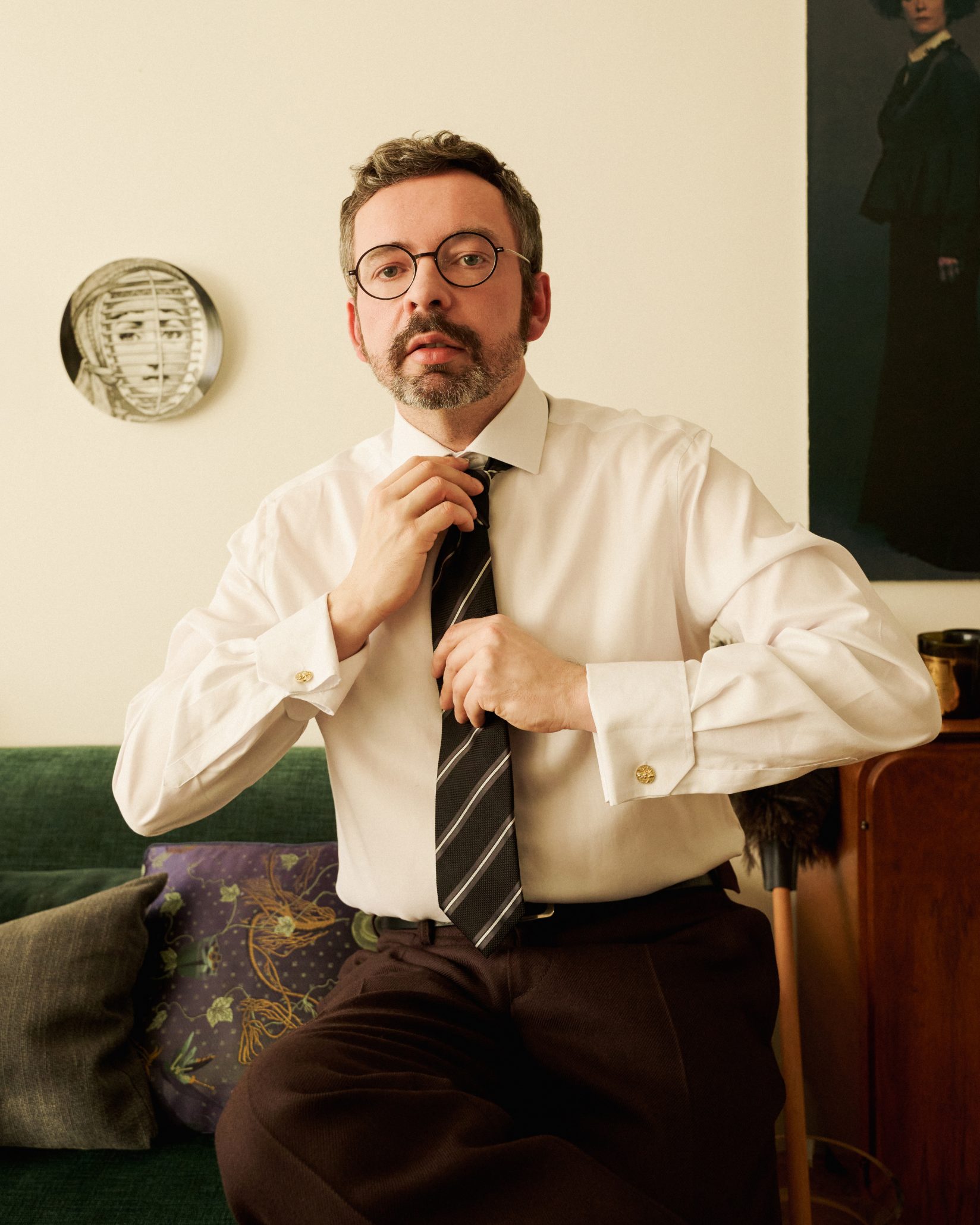
Lots of vases, paintings by a former partner, a peculiar teapot from Shanghai that I bought from a street vendor, a wooden whistle shaped like a penis from Bogotá, a waving plastic cat from a shop in Letná, a carved candlestick from my grandfather, armchairs from the New Stage, a 1970s lamp from a flea market, and Fornasetti plates. It’s a colorful mix of life.
Foto: Magdalena Vojteková
